


Starting an export business sounds like a thrilling opportunity, right?
You imagine connecting with buyers in the USA, Canada, Europe, and other major markets, shipping quality African products overseas, and building a profitable business. But that excitement often fades quickly when you encounter one of the biggest challenges every exporter faces: finding reliable suppliers.
The truth is that your export business is only as strong as the suppliers behind it. No matter how good your marketing is or how many buyers you attract, unreliable suppliers can destroy your reputation faster than almost anything else.
One bad batch of goods, a delayed shipment, poor product quality, or suppliers who fail to keep their promises can wipe out your hard-earned capital and stop your export journey before your first container even leaves Nigeria.
If you’re in Nigeria or anywhere across Africa and you’re looking to export agricultural products, processed foods, natural products, or manufactured goods, choosing the right suppliers should be one of your top priorities from day one.
That’s exactly why this guide exists.
Finding trustworthy suppliers isn’t just about locating people who can provide products. It’s about building relationships with partners who can consistently deliver quality, meet deadlines, maintain standards, and help your business grow over the long term.
Unfortunately, many new exporters rush into agreements with the first suppliers they find because they’re eager to secure inventory and start selling. The result is often costly mistakes, damaged buyer relationships, rejected shipments, and significant financial losses.
I’ve seen promising exporters lose thousands of dollars simply because they partnered with the wrong suppliers. In many cases, the products looked great during the first conversation, but problems appeared when production started, deadlines approached, or international quality standards had to be met.
The good news is that these mistakes can be avoided.
When you understand how to evaluate suppliers, verify their capabilities, assess their reliability, and build strong supplier relationships, you significantly increase your chances of creating a successful export business.
In this guide, you’ll learn how to identify trustworthy suppliers, avoid common supplier-related mistakes, and build a reliable supply chain that supports long-term export growth rather than becoming a source of constant problems.
Do You Want To Know How To Gain a Competitive Advantage Over Other Nigerian Exporters? Read this
Why Finding the Right Suppliers Matters More Than Ever
The global demand for authentic African products continues to rise every year. However, not every supplier who claims they can deliver actually has the capacity or reliability to do so. This is where many new exporters make costly mistakes: they get attracted by low prices or smooth talk, only to face poor quality, missing documents, or suppliers who vanish after payment. When you work with unreliable sources, you risk a damaged reputation, rejected shipments at foreign ports, and financial losses that are hard to recover from.
In today’s competitive export world, especially from Africa, having a strong and trustworthy supply chain sets you apart. It gives you confidence when dealing with overseas customers who demand reliability. Good suppliers understand export requirements like quality certifications, packaging standards, and timely production, which saves you from unnecessary stress and extra costs.
With the right approach, you can build a solid network of suppliers that becomes the foundation of your export business. Finding reliable suppliers for export products is one of the most important steps you’ll take.
Step 1: Know Exactly What You Want to Export
Before you even start looking for suppliers, you need to get very clear about what exactly you want to sell abroad. This first step is often overlooked, but it can save you from a lot of confusion and costly mistakes later. When you know your product well, you can target the right people and the right places. Start by researching what is actually selling in your target markets. Spend time checking platforms like Amazon and Etsy, as well as ethnic grocery stores in Europe and North America. See which African products are popular, what customers are saying in reviews, and what prices they are willing to pay. This will help you understand real demand instead of guessing.
Next, go local. Visit busy markets in places like Lagos, Onitsha, Kano, or Aba. Talk directly to farmers, small producers, and manufacturers. Many new exporters jump in too quickly without this clarity and end up switching products midway, which wastes time and money.
Step 2: Tap Into Local Networks and Associations
One of the smartest things you can do when searching for reliable suppliers is to start close to home instead of jumping straight into random online searches. Local networks and associations give you access to trusted people and opportunities that you won’t find anywhere else. Begin by joining export-focused organizations in your country. In Nigeria, the Nigerian Export Promotion Council (NEPC) is a great place to start. They offer useful resources, training, and connections to serious suppliers and fellow exporters. Chambers of commerce and industry associations in your state or region also organize events where real business happens. These groups bring together people who are already active in export, and many of them are happy to share advice and offer partnerships.
Attending trade fairs and exhibitions is another powerful move. These events are full of suppliers showcasing their products. You get to meet them face to face, see samples, and ask questions directly. Also, don’t underestimate the value of visiting production clusters. If you’re dealing with cassava products, travel to the main cassava-growing areas. For textiles and clothing, explore the clusters in Aba or Kano. Seeing the environment where the products are made gives you real insight into the supplier’s capacity and working style.
Word-of-mouth recommendations remain one of the best ways to find good suppliers. Talk to other exporters who have been in the game longer than you. Ask them who they work with and why they trust those suppliers. Building these local connections also helps you understand the practical side of exporting from Africa, things like seasonal supply issues, transportation challenges within the country, and how to handle common problems.
Step 3: Use Smart Online Tools and Platforms
The internet has made finding suppliers much easier than before, but it can also feel overwhelming because there’s so much noise and too many options that aren’t trustworthy. The idea is to use the right online tools and platforms in a smart, focused way so you don’t waste time chasing dead ends. Start with well-known B2B websites like Alibaba, but be extra careful when dealing with African suppliers. These platforms are useful for initial searches, but always dig deeper. Look for suppliers who have been active for several years, have real transaction history, and show verified badges where possible. Combine this with local directories and government-backed exporter databases, and you’re good to go.
Social media groups for African exporters are another goldmine. Join active Facebook groups, LinkedIn communities, and WhatsApp business networks where exporters share experiences. You’ll find people posting about reliable partners and warning others about problematic ones. The beauty of using these online tools is that they connect you to a wider pool of suppliers across different regions. You can compare options, negotiate better terms, and even find specialists in niche products like organic spices or natural oils.
Step 4: Master Supplier Verification Like a Pro
This is the step where many new exporters drop the ball, and it’s honestly one of the most important parts of building a successful export business. Proper verification turns potential problems into strong, lasting partnerships that protect your money and reputation. Always begin by requesting samples. Never commit big money without testing the product yourself. In fact, pay for the samples if needed; it’s a small investment for peace of mind. Test the quality, check packaging, and if possible, send them to a lab for proper analysis. This is especially crucial for food items or dried fruits that need to meet international standards.
Next, check all necessary certifications. Depending on your target market, you may need:
- Food safety certificates
- Organic approvals
- Phytosanitary documents or FDA compliance.
Ask to see them and verify they are current. Reliable suppliers are usually proud to share these documents because it shows they take export seriously. If you can, visit the supplier’s facility in person. Go see their operations, watch the production process, and inspect storage areas. You’ll learn a lot just by being there, such as how organized they are, the condition of their equipment, and the general professionalism of the team.
For bigger orders, consider using third-party inspection services. Yes, it costs a little extra upfront, but it can save you from major losses later when goods get rejected at the destination port. Finally, watch out for common red flags. Be cautious of suppliers who avoid video calls, push for full payment upfront, or cannot give clear timelines for production and delivery. If they dodge simple questions or pressure you too much, it’s better to walk away and keep looking.
Step 5: Build Relationships That Last
Finding a good supplier is one thing, but turning them into a reliable long-term partner is what truly makes your export business strong and sustainable. Reliable suppliers are more than just vendors; they become teammates who help your business grow.
- Communicate clearly and regularly.
- Share your expectations, timelines, and any challenges you face with overseas buyers.
- Visit them when possible or schedule check-in calls.
- Show genuine interest in their work and understand the difficulties they deal with, such as power supply issues, raw material costs, or transportation problems common in many parts of Africa.
When you treat suppliers fairly and with respect, they will prioritize your orders, especially during busy seasons. The human side of business is powerful. Remember birthdays, send small tokens of appreciation, or celebrate milestones together. These small gestures build loyalty that goes beyond transactions. In the export world, where delays and unexpected issues can happen, having suppliers who truly stand by you makes all the difference.
Taking the Next Step in Your Export Journey
Finding reliable suppliers for export products doesn’t have to be stressful or risky. With clear planning, thorough checks, strong relationships, and the right support, you can build a thriving export business. Ready to move forward? African Import Export Solutions is here to help you every step of the way. From sourcing quality suppliers to reaching buyers in high-demand markets, the AIES team provides the expertise and infrastructure you need to succeed.
Don’t let poor suppliers hold you back. Connect with AIES today and turn your export dreams into steady income in dollars. Start small, verify everything, build relationships, and scale confidently. Your reliable supplier network awaits, and so do the opportunities in the global market.
Awarded Most Reliable Shipping Company (2019-2023)

FAQs
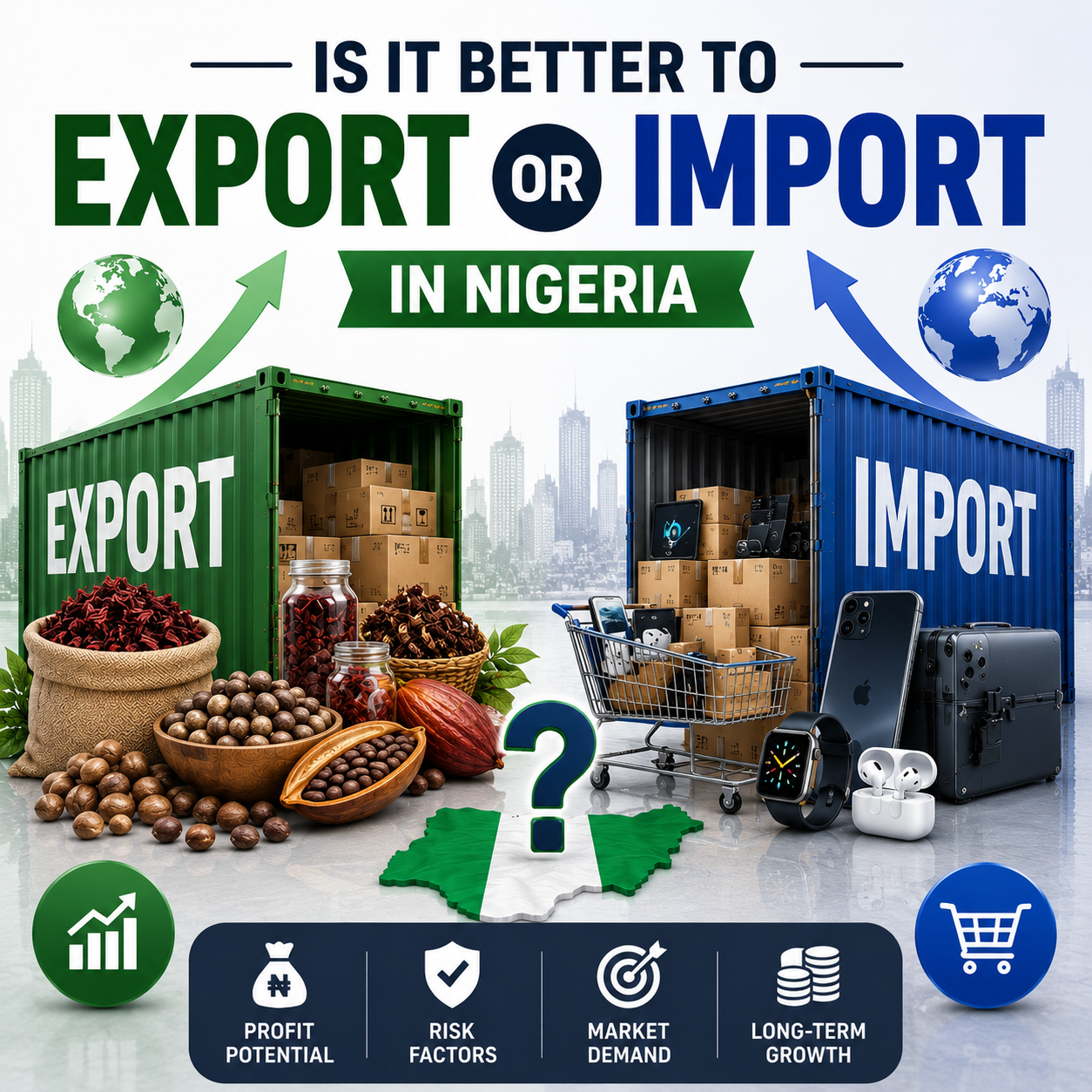
Is it better to export or import in Nigeria?
There is no one-size-fits-all answer. Both export and import businesses can be profitable. The best option depends on your capital, experience, risk tolerance, target market, and long-term business goals.
Is it better to export or import in Nigeria?
There is no one-size-fits-all answer. Both export and import businesses can be profitable. The best option depends on your capital, experience, risk tolerance, target market, and long-term business goals.
Which business is more profitable: export or import?
Both models can generate strong profits. However, exporting often provides access to foreign currency earnings and international markets, while importing allows businesses to meet local demand for products Nigerians need every day.
What skills do I need for export or import business?
Yes. Many Nigerian exporters earn substantial profits by selling agricultural products, food items, natural products, textiles, and manufactured goods to buyers in the USA, UK, Canada, Europe, the Middle East, and other global markets.
Is exporting from Nigeria profitable?
Important skills include:
- Market research
- Negotiation
- Product sourcing
- Documentation management
- Financial planning
- Logistics coordination
- Customer relationship management
Is importing into Nigeria still profitable?
Absolutely. Nigeria remains a major consumer market, and there is strong demand for imported products such as electronics, fashion items, machinery, household goods, auto parts, and industrial equipment.
Do I need export or import licenses?
Depending on the products involved, you may need:
- Business registration
- NEPC registration (for exporters)
- Product certifications
- Regulatory approvals
- Customs documentation
Which requires less capital: export or import?
It depends on the product. Some export businesses can start with relatively low capital by sourcing products locally. Certain import businesses may require larger upfront investments due to product purchases, shipping costs, duties, and clearance fees.
Should I choose export or import?
The best choice depends on your goals. If you want to leverage global demand for Nigerian products and earn foreign currency, exporting may be attractive. If you want to supply products that are in high demand locally, importing may be a strong option. Some of the most successful entrepreneurs eventually combine both strategies to build larger and more resilient businesses.
How does the exchange rate affect importers?
Importers are heavily affected by exchange rate changes because they often purchase goods in foreign currencies. A weaker naira can significantly increase costs and reduce profit margins.
How can AfricanIES help with export and import?
African Import Export Solutions (AfricanIES) supports businesses through:
- International shipping
- Export logistics
- Import logistics
- Warehousing solutions
- Export training
- Documentation assistance
- Product sourcing support
- Trade advisory services
We help entrepreneurs and businesses navigate both export and import opportunities with greater confidence and efficiency.
Next Step
Ready to start an export or import business?


Leave a Reply