

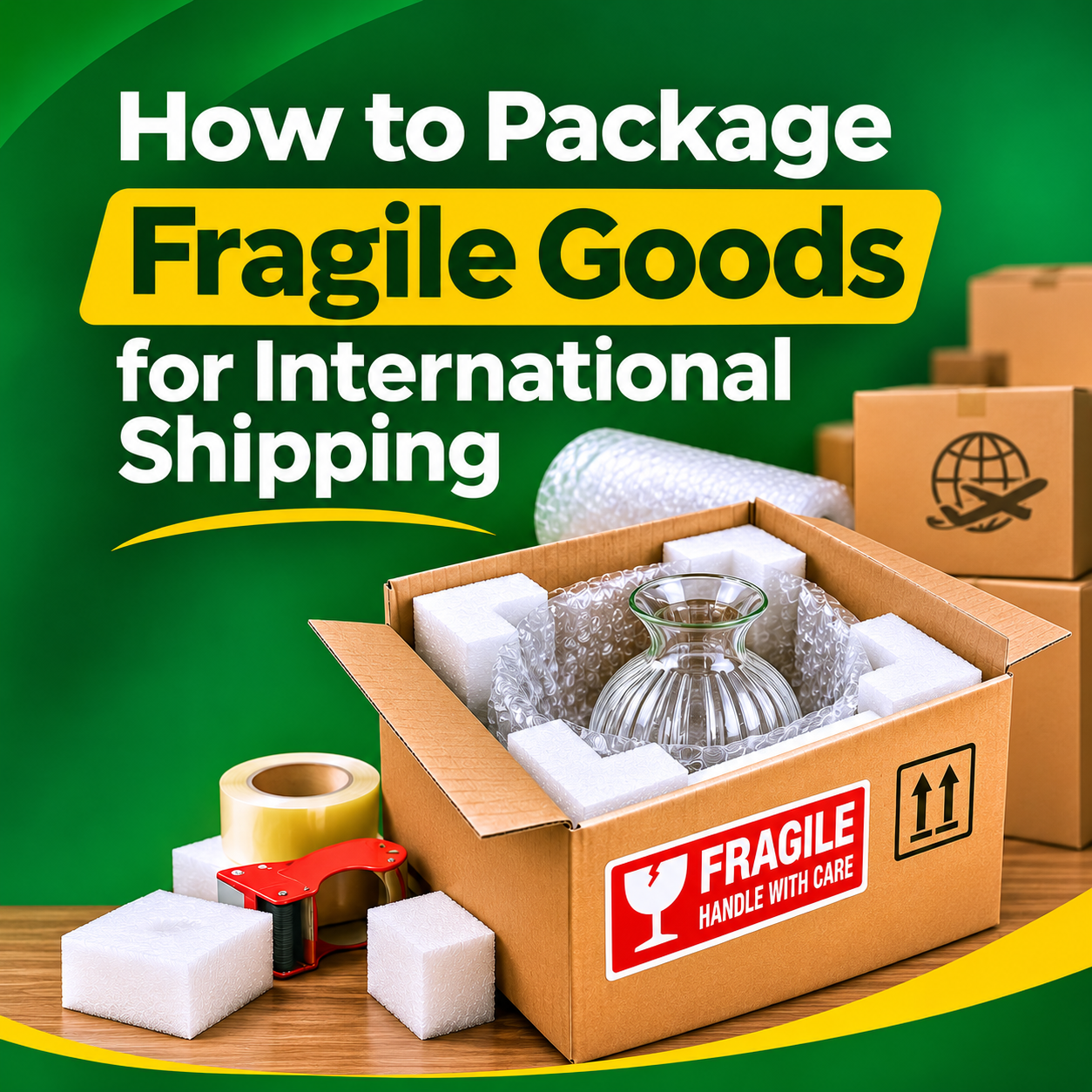

Imagine ordering beautiful glassware, expensive electronics, ceramic tiles, or delicate home decorations from China or the USA.
You’ve paid your supplier, arranged international shipping, and waited patiently for your items to arrive in Nigeria.
But when you finally open the package, your excitement turns into disappointment.
The glassware is broken. The television screen is cracked. Some of the ceramic items are damaged.
And suddenly, what looked like a profitable purchase becomes an unexpected loss.
The painful part? Some of this damage could have been prevented with better packaging.
International shipping involves more than moving goods from one country to another. Your items may pass through warehouses, loading points, airports, seaports, customs facilities, and delivery vehicles before reaching you.
During this journey, packages can experience vibrations, stacking pressure, movement, and repeated handling.
That’s why knowing how to package fragile goods for international shipping is essential, whether you’re importing products for resale or buying something valuable for personal use.
At African Import Export Solutions (AfricanIES), we help individuals and businesses ship goods from China and the USA to Nigeria through our international shipping services.
And one thing every importer should understand is this:
Choosing a reliable shipping company matters, but proper packaging is equally important.
In this guide, you’ll discover how to protect fragile items, avoid common packaging mistakes, and prepare your goods for international shipping.
Table of Contents
- What Are Fragile Goods in International Shipping?
- Why Proper Packaging Matters
- 10 Essential Tips for Packaging Fragile Goods
- Best Packaging Materials for Fragile Items
- How to Package Different Types of Fragile Products
- Air Shipping vs Ocean Shipping for Fragile Goods
- Common Packaging Mistakes to Avoid
- Who Is Responsible for Packaging Fragile Goods?
- How AfricanIES Helps You Ship Fragile Goods Internationally
- Ship Your Fragile Goods with AfricanIES
- Frequently Asked Questions
What Are Fragile Goods in International Shipping?
Fragile goods are products that can easily break, crack, bend, scratch, or become damaged when exposed to impact, pressure, vibration, or improper handling.
These products often require special packaging because ordinary cartons may not provide enough protection during international transportation.
Common examples include:
-
Electronics: Televisions, computer monitors, laptops, cameras, and other sensitive devices.
-
Glass products: Mirrors, glassware, bottles, and decorative glass items.
-
Ceramics: Plates, mugs, porcelain products, and decorative ornaments.
-
Furniture: Glass tables, marble surfaces, and delicate furniture components.
-
Lighting products: Chandeliers, pendant lights, and decorative lighting fixtures.
-
Machinery components: Precision instruments and sensitive mechanical parts.
-
Artwork: Framed pictures, sculptures, and other valuable decorative pieces.
-
Building materials: Certain tiles, sanitary fittings, and delicate finishing materials.
Although these products may be completely different, they share one important requirement.
They need packaging that protects them against the risks of transportation.
A fragile sticker alone is not enough.
Why Proper Packaging Matters When Shipping Internationally
When you’re buying products from another country, the purchase price is only part of your investment.
You may also spend money on international freight, customs clearance, local delivery, and other expenses.
If your goods arrive damaged, you could lose more than the value of the product itself.
You could lose money
Damaged products may be difficult or impossible to sell, especially if customers expect them to arrive in perfect condition.
For businesses importing in bulk, even a small percentage of damaged goods can affect profit margins.
You could disappoint your customers
Imagine promising a customer that their imported dining set will arrive next week, only to discover that several pieces are broken.
You may have to arrange replacements, issue refunds, or delay delivery.
You could face replacement shipping costs
If a product needs to be replaced, you may have to pay for another item and arrange additional shipping.
You could experience unnecessary delays
When goods arrive damaged, you may need to document the damage, contact the supplier, or submit an insurance claim.
Good packaging doesn’t eliminate every shipping risk, but it significantly improves your chances of receiving goods in good condition.
10 Essential Tips for Packaging Fragile Goods for International Shipping
Tip 1: Choose a strong, high-quality shipping box
The first step in protecting fragile goods is choosing the right outer packaging.
A weak carton may collapse under pressure, especially when other packages are stacked on top of it.
For many fragile items, a strong double-wall corrugated cardboard box provides better protection than a thin, single-wall carton.
For particularly heavy or delicate products, a properly designed wooden crate or specialized protective container may be more appropriate.
What to do:
Choose a box that is strong enough for the product’s weight and provides space for protective cushioning.
Avoid using cartons that are torn, wet, crushed, or weakened from previous use.
Tip 2: Wrap each fragile item separately
One of the biggest packaging mistakes is placing several breakable items together without separating them.
When products touch each other during transportation, vibrations and movement can cause scratches, cracks, or breakage.
Wrap each item individually using suitable protective materials such as bubble wrap, foam sheets, or molded inserts.
For example, if you’re shipping 20 ceramic mugs, don’t simply arrange them inside one carton.
Each mug should have its own protective wrapping, with cushioning between the items.
Remember: Fragile items should not be able to knock against one another inside the package.

Tip 3: Use enough cushioning material
Wrapping your goods is important, but protecting them from impact is just as necessary.
Cushioning materials absorb shocks and help prevent items from moving inside their packaging.
Common options include:
- Bubble wrap.
- Foam sheets.
- Foam inserts.
- Air cushions.
- Molded protective packaging.
- Corrugated cardboard dividers.
The best material depends on the product’s weight, shape, and fragility.
Heavy products need cushioning designed to withstand their weight without collapsing.
Avoid relying on loose paper or a thin layer of bubble wrap for valuable or highly fragile items.

Tip 4: Don’t leave empty spaces inside the box
An item can be properly wrapped and still break if it moves around inside the carton.
Empty spaces allow goods to shift when the package is lifted, tilted, or transported.
After placing your products inside the box, fill the remaining spaces with suitable cushioning.
Pay particular attention to the bottom, sides, and top.
A properly packed item should remain securely positioned without excessive pressure on delicate components.
Tip 5: Use double-box packaging for valuable items
For expensive electronics, glassware, ceramics, and other highly fragile products, double-box packaging can provide an additional layer of protection.
Here’s how it works:
- Wrap the product and place it inside a suitably sized inner box.
- Add cushioning to prevent movement inside the inner box.
- Place the sealed inner box inside a larger, stronger outer carton.
- Fill the space between both boxes with appropriate shock-absorbing material.
- Seal the outer carton securely.
This method helps reduce the impact transferred to the product during handling.
For particularly valuable or sensitive items, use packaging that has been designed and tested for the product rather than assuming any double-box arrangement is sufficient.
Tip 6: Protect corners, edges, and delicate surfaces
Some products are especially vulnerable around their corners and edges.
Examples include:
- Television screens.
- Glass tabletops.
- Mirrors.
- Picture frames.
- Marble slabs.
- Ceramic tiles.
Use corner protectors, foam padding, and rigid protective panels where appropriate.
For flat glass and other sensitive items, specialized crates or frames may be necessary to support the product properly.
A strong outer carton cannot compensate for an item that is poorly supported inside.
Tip 7: Seal your package properly
Even well-packed goods can become damaged if the box opens during transportation.
Use high-quality packaging tape suitable for the weight and surface of the carton.
For standard corrugated cartons, the H-taping method can help secure the central seam and the edges where the flaps meet.
Avoid using ordinary office tape, string, or weak adhesives.
For heavier shipments, additional reinforcement may be necessary.
Tip 8: Label your package clearly
Labels such as FRAGILE, HANDLE WITH CARE, and THIS SIDE UP can communicate handling instructions.
However, they should never replace proper protective packaging.
A fragile label does not guarantee that every person handling the shipment will treat it differently.
Make sure the product is protected even if the carton is tilted or experiences normal handling impacts.
Also ensure the shipping address, shipment identification, and other required labels are clearly visible.
Tip 9: Consider moisture protection for ocean shipping
Ocean shipping can expose cargo to changes in temperature and humidity.
For moisture-sensitive goods, condensation and damp conditions can cause problems such as corrosion, mold, or packaging deterioration.
Depending on the product, protective measures may include:
- Moisture-resistant wrapping.
- Sealed protective bags.
- Suitable desiccants.
- Corrosion protection.
- Properly treated and compliant wooden packaging.
For wooden crates used in international trade, applicable ISPM 15 requirements may need to be met.
This is especially important when shipping machinery, electronics, artwork, or other moisture-sensitive products.
Tip 10: Take photos before shipping
Before your fragile goods leave the supplier or warehouse, request clear photographs of the items and their packaging.
Where possible, document:
- The condition of the products before packing.
- The cushioning and protective materials used.
- How the items are arranged inside the carton.
- The sealed outer packaging.
- Any product identification or shipment labels.
These photographs can help you verify how the goods were prepared and provide useful evidence if damage is discovered later.
For importers buying from China, requesting packaging photos before dispatch can help identify potential problems before the goods begin their journey.
Best Packaging Materials for Fragile Goods
Not all packaging materials provide the same level of protection.
The table below explains some commonly used materials and when they may be appropriate.
| Packaging material | Best suited for |
|---|---|
| Bubble wrap | Glassware, ceramics, and smaller breakable items |
| Foam sheets | Delicate surfaces and scratch protection |
| Molded foam inserts | Electronics and precision equipment |
| Double-wall cartons | Fragile goods requiring stronger outer packaging |
| Cardboard dividers | Separating bottles, cups, and similar items |
| Corner protectors | Mirrors, frames, screens, and furniture edges |
| Wooden crates | Heavy, oversized, or particularly sensitive cargo |
| Moisture barriers | Products vulnerable to humidity during transit |
For expensive, heavy, or unusually fragile goods, professional packaging design may be worth the additional expense.
The right packaging should match the product’s characteristics and the expected transportation conditions.
Air Shipping vs Ocean Shipping: Which Is Better for Fragile Goods?
One question many importers ask is whether fragile goods should be shipped by air or ocean.
The answer depends on the type of goods, their value, size, packaging, budget, and delivery requirements.
| Factor | Air shipping | Ocean shipping |
|---|---|---|
| Transit time | Generally faster | Generally slower |
| Cost | Often higher for bulky cargo | Often more economical for large volumes |
| Handling risks | Requires protection against handling and vibration | Requires protection against handling, movement, stacking, and moisture |
| Best suited for | Smaller, urgent, high-value shipments | Large, heavy, or bulk shipments |
| Packaging | Strong cushioning and secure cartons | May require stronger moisture protection, crating, and load securing |
Neither shipping method guarantees that fragile items will arrive without damage.
The most important factors are appropriate packaging, careful cargo handling, and selecting a shipping service suitable for the goods.
At AfricanIES, we offer air and ocean shipping services from China and the USA to Nigeria.
Our team can help you understand the available shipping options for your shipment.
Common Packaging Mistakes That Could Damage Your Goods
Even experienced importers can make packaging mistakes.
Here are some worth avoiding.
Using oversized cartons without enough cushioning: The extra space allows products to move around during transportation.
Putting fragile and heavy products in the same box: Heavy items can crush or damage delicate products.
Using weak or damaged cartons: Packaging that cannot withstand normal stacking and handling may fail before the goods arrive.
Relying only on a fragile sticker: A label cannot protect a product from physical impact.
Ignoring moisture protection: Some products can be damaged by condensation even when they are not physically broken.
Failing to inspect packaging before dispatch: Poor packaging is often easier to correct before goods leave the supplier than after they enter international transit.
The cost of proper packaging is often small compared with the cost of replacing damaged products.
Who Is Responsible for Packaging Fragile Goods?
This is an important question, especially when buying products from suppliers in China or the USA.
Packaging responsibility depends on the purchase agreement, shipping arrangement, and services being provided.
In many cases, the supplier prepares the original packaging before dispatch.
The shipping company then transports the goods according to the agreed service.
However, you should never assume that a shipping provider will automatically repackage items that arrive at its warehouse.
Before shipping, confirm:
- Who will package the products?
- Whether the packaging is suitable for international transportation.
- Whether additional protective packaging is available.
- Who will pay for any requested repackaging.
- Whether the goods qualify for insurance coverage.
If you’re purchasing fragile goods from a supplier, ask them to confirm the packaging method before sending the products.
For expensive products, you can also request photos or videos showing how the items are packed.
How AfricanIES Helps You Ship Fragile Goods Internationally
Buying fragile goods from overseas should not leave you worrying about every stage of their journey.
At African Import Export Solutions, we understand that imported goods represent real investments.
Whether you’re buying glassware for your retail store, electronics for your business, furniture for your home, or equipment for your company, you want your goods to arrive in good condition.
AfricanIES provides international logistics services that help businesses and individuals move goods from China and the USA to Nigeria.
Our services include:
China sourcing and procurement
Our team in China can help you find suppliers, compare quotations, communicate product requirements, and coordinate purchases.
Pre-shipment verification support
For eligible sourcing and verification requests, our team can help check product details and coordinate packaging-related questions before shipment.
Air shipping from China and the USA
We provide air shipping options for customers who need to move eligible goods to Nigeria.
We help customers transport eligible larger shipments and bulk purchases by sea.
Customs clearance support
We assist with customs documentation, duty assessment, regulatory coordination, and cargo release for eligible shipments.
Local delivery in Nigeria
Once your shipment is ready, our local delivery services can help move your goods to their final destination, subject to availability.
Why plan your fragile shipment with AfricanIES?
With over 15 years of experience in international logistics, AfricanIES has supported thousands of Nigerian customers with international shipping.
We understand that shipping is not simply about moving a carton from one warehouse to another.
It’s about helping customers protect the time, money, and effort they’ve invested in their purchases.
Before shipping fragile goods, contact our team to confirm cargo acceptance, suitable transportation options, and any packaging or insurance requirements.
From sourcing and shipping to customs clearance and delivery, AfricanIES helps make importing easier.
Conclusion
Your Goods Are Valuable. Give Them the Protection They Deserve.
You’ve spent time finding the right products.
You’ve negotiated prices, made payments, and arranged for your goods to travel thousands of miles.
Don’t let poor packaging put that investment at unnecessary risk.
Whether you’re importing delicate home decorations, electronics, glassware, machinery, or other fragile items, proper packaging is one of the most important steps you can take before international shipping.
And when you’re ready to move your goods from China or the USA to Nigeria, AfricanIES is here to help.
With international shipping, sourcing support, customs clearance, and local delivery services, we help you manage the different stages of importing through one logistics partner.
Protect your purchase. Plan your shipment properly. Ship with AfricanIES.
Planning to Ship Fragile Goods to Nigeria?
Tell our team what you’re shipping, where it’s coming from, and how it’s packaged. We’ll help you explore the suitable shipping options.
Explore AfricanIES Shipping Services
Frequently Asked Questions
What is the safest way to package fragile items for international shipping?
Use a strong outer carton or suitable crate, wrap items individually, add appropriate cushioning, prevent movement inside the package, and protect vulnerable edges. Particularly fragile products may require custom-designed packaging.
Can I ship glassware from China to Nigeria?
Many types of glassware can be shipped internationally, subject to carrier acceptance and applicable requirements. Proper cushioning and separation are important to reduce breakage.
Can AfricanIES ship fragile goods from China to Nigeria?
AfricanIES provides China-to-Nigeria shipping services. Contact the team with details of your fragile items to confirm whether they can be accepted and what packaging requirements apply.
Is bubble wrap enough for international shipping?
Not always. Bubble wrap may provide useful cushioning, but it is not a substitute for a strong outer container, adequate spacing, and packaging designed for the product’s weight and fragility.
Should I use wooden crates for fragile goods?
Wooden crates may be appropriate for heavy, oversized, or particularly sensitive products. The crate must be properly designed and secured, and applicable international wood-packaging rules must be followed.
Does a fragile label guarantee careful handling?
No. Fragile labels communicate handling instructions but do not guarantee special treatment. Goods should be packed to withstand normal transportation conditions.
Can I insure fragile goods during international shipping?
Insurance availability depends on the goods, insurer, carrier, and policy terms. Check whether fragile items and breakage are covered, including any exclusions for inadequate packaging.
Can AfricanIES help me buy fragile products from China?
Yes. AfricanIES provides sourcing and procurement services in China. Our team can assist with supplier communication and product requirements, including discussing suitable packaging with suppliers.



Leave a Reply