


What if the products you paid thousands or even millions of naira for arrive in Nigeria, only for you to discover they are not what you ordered?
Wrong specifications. Poor-quality materials. Missing components. Defective products. Or machinery that doesn’t work as promised.
Unfortunately, these are some of the risks Nigerian importers face when buying products from China without proper inspection.
And the frustrating part? By the time your shipment arrives in Nigeria, correcting these mistakes could cost you more money, waste valuable time, and affect your business.
The good news is that many of these problems can be identified before your goods leave China.
That’s where product inspection comes in.
At African Import Export Solutions (AfricanIES), we understand how important it is to get the right products, in the right condition, before committing to international shipping.
With our team on the ground in China, we help importers take practical steps to verify their products, communicate with suppliers, and reduce avoidable purchasing risks.
In this guide, you’ll learn what product inspection means, why it matters, what to check before shipping, and how AfricanIES can help you buy from China with greater confidence.
Table of Contents
- What Is Product Inspection in China?
- Why Product Inspection Is Important When Importing from China
- Types of Product Inspection When Buying from China
- What Should You Check Before Shipping Products from China to Nigeria?
- Product Inspection vs Supplier Verification: What’s the Difference?
- When Should You Inspect Your Goods in China?
- Can You Inspect Products in China Without Travelling There?
- How AfricanIES Helps Nigerian Importers Buy from China With Greater Confidence
- Common Product Inspection Mistakes Nigerian Importers Should Avoid
- Final Thoughts: Inspect Before You Ship, Not After Problems Arise
- Frequently Asked Questions About Product Inspection in China
What Is Product Inspection in China?
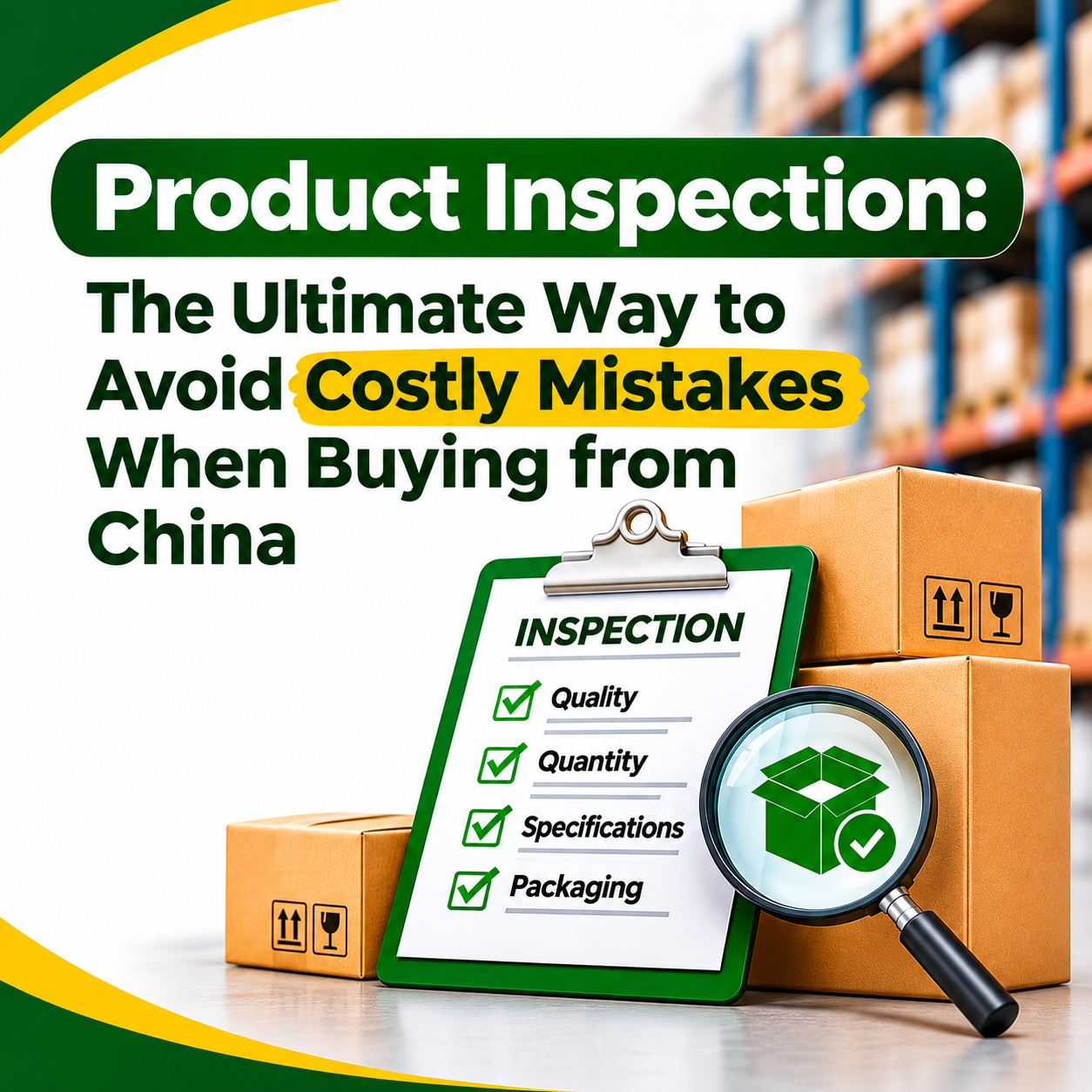
Product inspection is the process of examining goods to determine whether they meet agreed specifications, quality standards, quantities, and packaging requirements.
Simply put, it helps you confirm that what your Chinese supplier has produced or supplied matches what you ordered.
For example, imagine you ordered 500 rechargeable fans from a supplier in Guangzhou.
The supplier sends you pictures showing attractive, properly packaged products.
Everything looks fine.
But how do you know whether:
-
All 500 units are available?
-
The fans have the battery capacity you requested?
-
The products function correctly?
-
The materials meet your agreed specifications?
-
The correct accessories are included?
-
The packaging can withstand international shipping?
Pictures alone cannot answer all these questions.
A properly planned product inspection helps identify discrepancies through physical checks, sampling, measurements, and functional testing where applicable.
The extent of those checks depends on the inspection service and the agreed scope.
Why Product Inspection Is Important When Importing from China
China offers Nigerian businesses access to a wide range of products, competitive manufacturing opportunities, and numerous suppliers.
However, finding a supplier with an attractive price doesn’t automatically guarantee that you’ll receive the quality you expect.
Here are five important reasons to consider inspecting your goods before shipping.
1. Avoid Receiving Products That Don’t Match Your Order
One of the biggest concerns when importing from China is receiving products that differ from the agreed specifications.
You might order stainless steel equipment and receive a product made from a different material.
Or request a particular motor capacity, battery specification, fabric weight, or product dimension, only to discover that the delivered goods are different.
A lower price means very little if the product cannot serve its intended purpose.
Product inspection helps you compare the supplied goods against the specifications agreed with your supplier.
2. Identify Defects Before Your Goods Leave China
Imagine importing 1,000 electrical appliances and discovering that a significant number do not function properly.
If the problem is discovered after the goods arrive in Nigeria, arranging repairs, replacements, or returns could become expensive and complicated.
Inspection before shipment gives you an opportunity to identify visible defects and test selected products while they are still in China.
This makes it easier to discuss corrective action with the supplier before international transportation begins.
3. Reduce the Risk of Missing or Incorrect Items
Not every import problem involves defective products.
Sometimes, the issue is an incomplete order.
For instance, you may pay for 200 cartons of goods, but the supplier prepares only 180 cartons for dispatch.
Other times, the quantity is correct, but certain models, colours, sizes, or accessories are missing.
A product inspection that includes quantity verification can help identify these issues before shipment.
4. Protect Your Business Reputation
If you import products for resale, your customers expect you to deliver what you promised.
Poor-quality products can lead to complaints, returns, refund requests, and lost customers.
For business owners supplying retailers, contractors, schools, hotels, or industrial companies, a single problematic order can also damage an important business relationship.
Product inspection is not just about protecting your shipment. It’s also about protecting the trust your customers place in your business.
5. Avoid Unnecessary Shipping and Replacement Costs
International shipping involves costs that can be difficult to recover once goods have been dispatched.
These may include freight charges, customs duties, local transportation, storage, and handling expenses.
If defective or incorrect products arrive in Nigeria, you could end up paying additional costs to resolve the problem.
Identifying issues before shipment may help you avoid transporting goods that already have known problems.
Types of Product Inspection When Buying from China
Different inspections serve different purposes. Understanding them helps you choose the right checks for your order.
1. Pre-Production Inspection
A pre-production inspection takes place before manufacturing begins.
It may involve checking raw materials, components, production requirements, and manufacturing preparations.
This can be particularly useful for custom-made products or orders with detailed technical specifications.
2. During Production Inspection
This inspection happens while manufacturing is underway.
It helps identify quality problems before the entire order is completed.
For example, if a factory is producing 5,000 branded bags, inspecting early production units may reveal incorrect stitching, materials, colours, or branding.
Discovering these issues early can make corrections easier.
3. Pre-Shipment Inspection
Pre-shipment inspection is one of the most important quality-control steps for importers buying finished products from China.
It is generally carried out when production is complete or substantially complete and the goods are ready for dispatch.
Depending on the agreed inspection scope, checks may include:
-
Product appearance and workmanship
-
Quantity and model verification
-
Dimensions and specifications
-
Basic functionality
-
Packaging and labelling
-
Accessories and components
-
Visible damage or defects
Inspectors may use sampling methods rather than checking every unit.
This means a passed inspection reduces uncertainty but does not guarantee that every product is defect-free.
4. Container Loading Inspection
A container loading inspection focuses on the goods being loaded for transportation.
It can help verify that the correct products and quantities are loaded and that handling and loading conditions meet agreed requirements.
This can be especially useful for bulk shipments, industrial equipment, and containerised cargo.
What Should You Check Before Shipping Products from China to Nigeria?
Before approving your goods for shipment, there are several important details you should confirm.
| Inspection Area | What to Verify |
|---|---|
| Product specifications | Model, size, material, colour and technical requirements |
| Quantity | Number of units, cartons and product variations |
| Quality | Visible defects, workmanship and consistency |
| Functionality | Whether selected products operate as expected |
| Packaging | Carton strength, protective materials and labelling |
| Accessories | Manuals, chargers, cables, spare parts and other included items |
| Branding | Logos, labels, printing and custom packaging |
| Documentation | Relevant invoices, packing lists and required product documents |
The exact inspection checklist should reflect the products you’re buying.
For machinery, you may need technical and operational testing. For clothing, material quality, stitching, measurements, and finishing may be more important.
For regulated products, additional certification or compliance checks may also be necessary.
Product Inspection vs Supplier Verification: What’s the Difference?
Many importers assume that verifying a supplier automatically guarantees the quality of their products.
But these are two different processes.
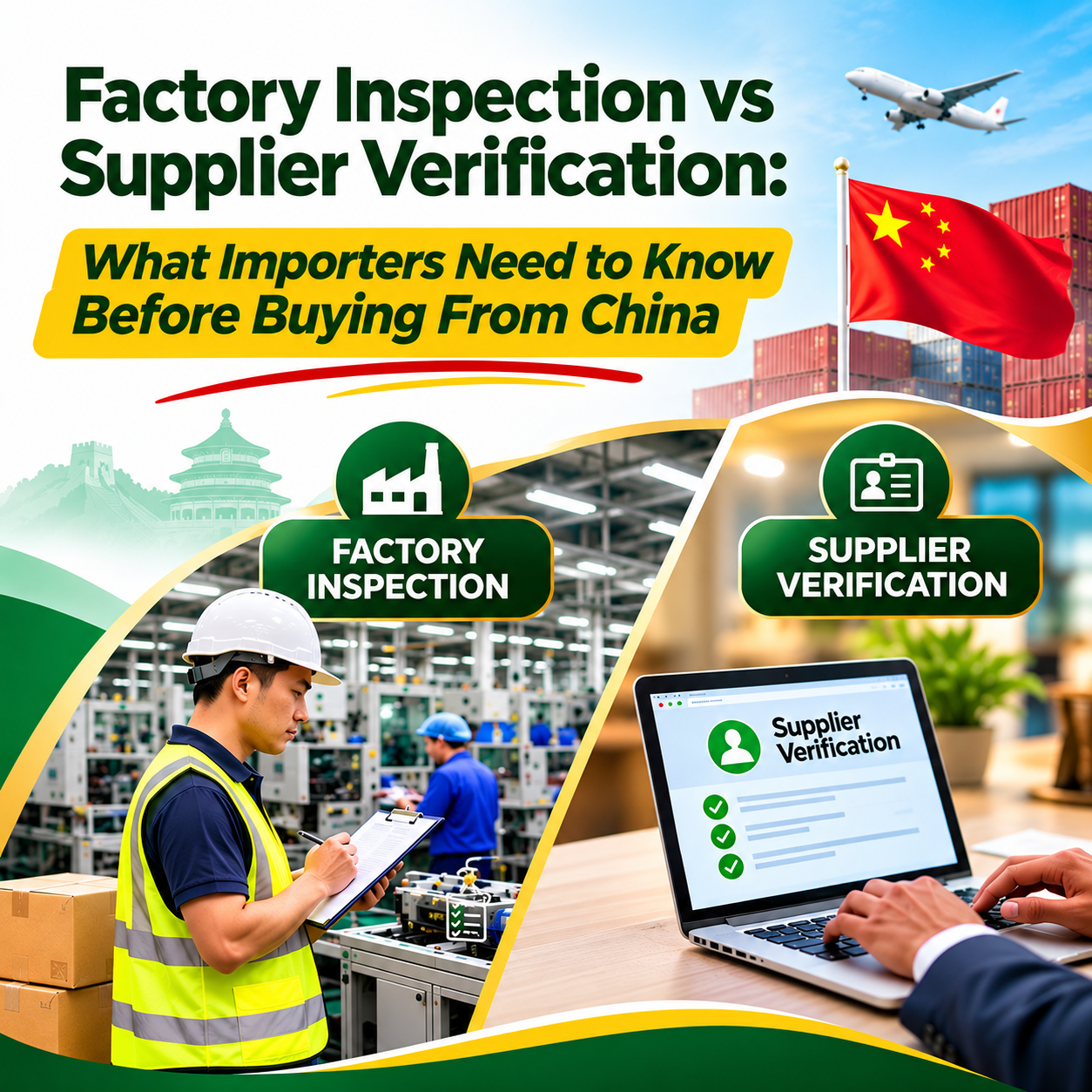
Supplier verification focuses on the company you’re buying from. It may involve confirming business registration, operating details, manufacturing capabilities, and other relevant information.
Product inspection focuses on the actual goods being produced or supplied.
For example, a legitimate factory can still manufacture a product that fails to meet your specifications.
Likewise, a product sample may look excellent even when the supplier has not demonstrated reliable production capacity.
That’s why supplier verification and product inspection work best as complementary risk-management steps.
For a more detailed comparison, read our guide on Factory Inspection vs Supplier Verification: What Importers Need to Know Before Buying from China.
When Should You Inspect Your Goods in China?
One common mistake importers make is waiting until their supplier has already dispatched the goods.
At that stage, the opportunity to identify and resolve certain problems before shipment may have passed.
Ideally, your inspection requirements should be agreed with the supplier before placing the order.
You should establish:
-
The exact product specifications.
-
The inspection standards and acceptance criteria.
-
The stage at which inspection will take place.
-
Who will arrange and pay for inspection.
-
What happens if the products fail inspection.
-
Whether outstanding payment depends on satisfactory inspection results.
Where possible, arrange the final inspection before approving dispatch or making the final supplier payment, subject to your agreed purchasing terms.
The best time to discover a product problem is before that product leaves the supplier’s premises.
Can You Inspect Products in China Without Travelling There?
Yes. You don’t necessarily have to travel to China to arrange a product inspection.
Depending on the product, supplier location, and inspection requirements, you may be able to engage an independent inspection company or arrange suitable local support.
An inspection report may include photographs, measurements, test findings, identified defects, and recommendations.
However, it’s important to understand exactly what the inspection covers.
A basic visual check is not the same as a detailed technical inspection or certified laboratory test.
For high-value machinery, electrical equipment, or safety-sensitive products, specialist testing may be necessary.
How AfricanIES Helps Nigerian Importers Buy from China With Greater Confidence
You shouldn’t have to make every important buying decision based only on what a supplier tells you.
At AfricanIES, we help Nigerian businesses navigate the challenges of buying products directly from China.
Our team on the ground in China supports importers through supplier sourcing, communication, procurement assistance, and international logistics.
1. Find Suitable Suppliers in China
Instead of relying entirely on the first supplier you discover online, AfricanIES can help you search for suitable suppliers based on your product requirements.
Our sourcing support starts from just $25, with quotations from up to three suppliers, depending on the request.
This gives you options to compare before making a purchasing decision.
2. Communicate Directly With Chinese Suppliers
Language differences can create misunderstandings, especially when discussing technical specifications, minimum order quantities, branding, and packaging.
Our Chinese-speaking team communicates directly with suppliers to clarify important purchasing details.
3. Support Product Verification and Inspection Arrangements
Depending on your product and requirements, our team can help you discuss product checks and suitable inspection arrangements before shipment.
The exact inspection scope, availability, and any additional fees should be confirmed in advance.
This is particularly important when buying machinery, electronics, industrial equipment, or large quantities of goods.
4. Arrange Shipping from China to Nigeria
Once your goods are ready for shipment, AfricanIES can assist with transportation from China to Nigeria.
Our shipping options include:
China Air Cargo
-
Standard air cargo rates from $10.99/kg
-
Business Account rates from $9.99/kg
-
Estimated delivery timeframe of 5–10 days
China Ocean Shipping
-
Suitable for bulky and large-volume shipments
-
Estimated transit time of 40–45 days
-
Consolidation and customs clearance support
Shipping costs, transit times, and eligibility depend on the shipment and applicable service terms.
With sourcing, procurement, and shipping support available through AfricanIES, you can coordinate important stages of your China import process more conveniently.
Common Product Inspection Mistakes Nigerian Importers Should Avoid
Even when importers understand the importance of inspection, some mistakes can reduce its effectiveness.
Relying only on supplier photographs: Pictures and videos may be helpful, but they cannot always confirm product performance, materials, or consistency across an entire order.
Failing to provide detailed specifications: If you haven’t clearly defined what you expect, it becomes difficult to determine whether the supplied products meet your requirements.
Inspecting too late: Waiting until the goods ship can make corrections harder and more expensive.
Assuming every inspection checks all units: Many inspections are sample-based. Always confirm the inspection method, sample size, and acceptance criteria.
Ignoring inspection findings: If an inspection identifies significant defects, resolve the concerns with the supplier before approving shipment.
Choosing inspection services based only on price: Inspector qualifications, inspection scope, and reporting quality also matter.
Final Thoughts: Inspect Before You Ship, Not After Problems Arise
Buying from China can create valuable opportunities for Nigerian businesses.
But a competitive supplier price is only one part of a successful import transaction.
The quality of the products, accuracy of the specifications, reliability of the supplier, and condition of the goods all matter.
Because the real cost of importing is not just what you pay the supplier. It’s also what a mistake could cost your business.
Product inspection helps you make more informed decisions before your goods leave China.
And with experienced support on the ground, you don’t have to handle every stage of the buying process alone.
Ready to Buy from China? Let AfricanIES Help You Get Started
Whether you’re importing machinery, solar equipment, electronics, building materials, vehicle parts, furniture, packaging materials, or other products, our team in China is ready to discuss your requirements.
Get sourcing support from as low as $25.
We’ll help you explore suitable suppliers, compare quotations from up to three suppliers, and clarify important product details before you make a decision.
You can also discuss your inspection needs and shipping arrangements with our team.
Don’t risk spending more to correct mistakes that could have been identified before shipment.
Tell Our China Team What You Want to Buy
Call: 0700 800 7000

Leave a Reply