

Waiting for a shipment can be stressful when you don’t know where your goods are or what stage of the shipping process they have reached.
Whether you’re importing products from China or the USA to Nigeria, you should be able to check the progress of your shipment without constantly calling or messaging your shipping company.
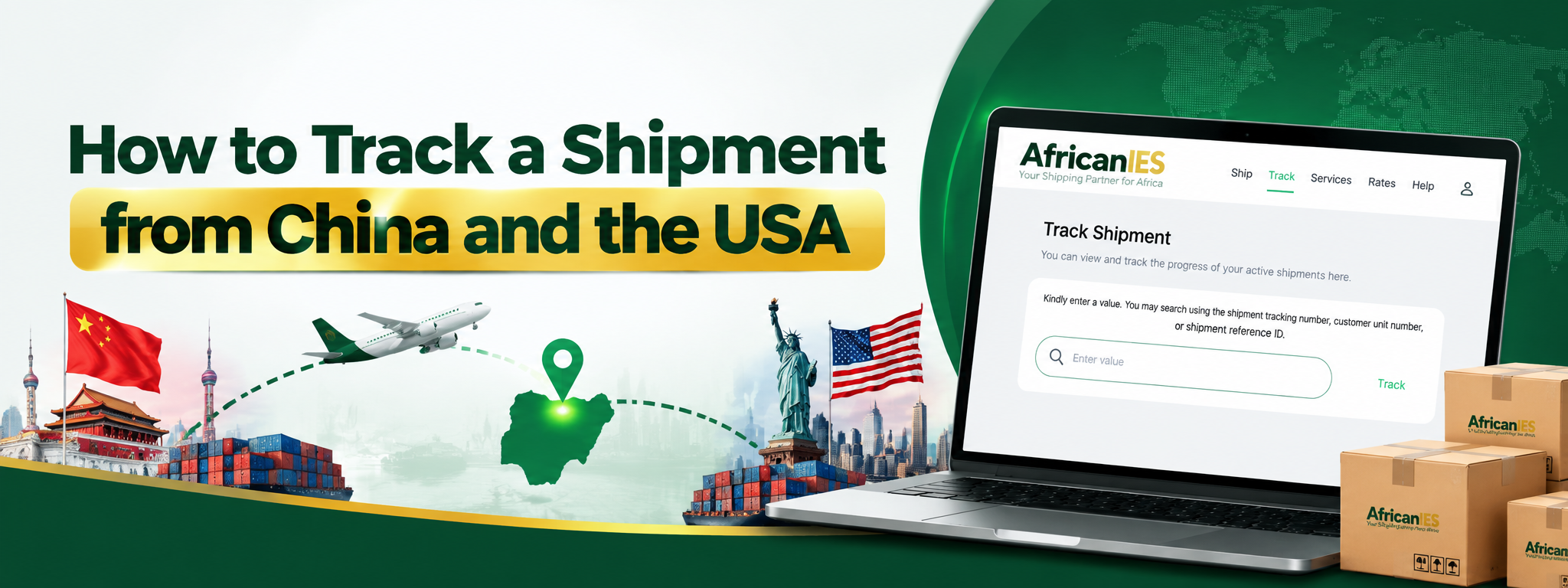
With AfricanIES, you can track your shipment online using your shipment tracking number, customer Unit Number, or Shipment Reference ID.
In this guide, we’ll show you how to track your AfricanIES shipment from China or the USA to Nigeria in just a few simple steps.
Table of Contents
- Why Tracking Matters More Than You Think
- Understanding Tracking Numbers and Carrier Systems
-
Tracking Number Formats by Carrier
-
- How to Track A Shipment From China
- How to Track a Shipment from China to Nigeria
-
Why Your Unit Number Matters
- Steps on How to Track Your AfricanIES Shipment
- Live Tracking and API Options for Businesses
-
Reading Status Updates Around Nigerian Customs
- Why Tracking Matters for Importers
-
Why Tracking Matters More Than You Think
A tracking number is often treated as a simple way to see where a parcel is. In practice, it’s the key record for deciding what to do next. It can connect the shipment to an origin scan, carrier movement, route transfer, destination handling event, and proof of delivery. If you only watch the location, you may miss the event that affects your cash flow.
For a Nigerian importer, the most important question often isn’t “Where is the cargo?” It’s “What must happen before I can collect it?” A shipment marked as discharged may already be at a Nigerian terminal. A shipment marked as under examination may be waiting for documents, inspection, or a release decision. A parcel marked out for delivery may refer to a local leg in another country, not final delivery in Nigeria.
Tracking connects movement to decisions
Use the tracking record to decide when to:
- Arrange collection: Confirm that the cargo has reached the destination terminal or local delivery network before sending a vehicle.
- Prepare documents: Match the shipment status with the paperwork your clearing agent needs.
- Escalate delays: Give the forwarder the last confirmed event instead of relying on a general statement that the shipment is moving.
- Update customers: Send a clear status message based on a verified scan, not an estimate copied from a supplier.
Nigeria’s logistics visibility has improved, but it still trails stronger global logistics performers. The World Bank dataset shows Nigeria’s track-and-trace score rose from 2.35 in 2012 to a peak of 3.16 in 2014, then stood at 2.70 in 2016 and 2.68 in 2018 on a 1-to-5 scale. In 2022, Nigeria ranked 88th out of 139 countries for overall logistics performance and 87th for track and trace, which confirms that shipment visibility is a recognised performance area, not an optional convenience. World Bank logistics tracking data for Nigeria
Practical rule: Treat the tracking number as the master key for every follow-up conversation with your supplier, carrier, forwarder, terminal and customer.
If you’re sending customer notifications yourself, use clear messages that name the status and the next expected action. A practical resource on order delivery SMS templates can help you structure updates without promising a delivery date you haven’t verified.
Understanding Tracking Numbers and Carrier Systems
When you ship goods internationally, you may come across several different numbers used to identify your package or shipment. Understanding what each number means can make tracking much easier.
A tracking number is a unique code assigned to a package or shipment. It allows the shipping company and customer to identify the shipment and view available updates as it moves through the logistics process.
If you’re buying from China or the USA, your supplier or local carrier may initially provide a tracking number for the journey to the AfricanIES warehouse. Once your goods are received and processed for international shipping with AfricanIES, your shipment will have information that can be used within the AfricanIES tracking system.
With AfricanIES, you can search for your shipment using your Shipment Tracking Number, Customer Unit Number, or Shipment Reference ID.
Your Customer Unit Number is particularly important because it connects packages arriving at our warehouse to your AfricanIES account. This is why you should always ensure your Unit Number is clearly included when sending goods to an AfricanIES warehouse.
To check your shipment, simply visit AfricanIES.com, click Track, enter your Tracking Number, Customer Unit Number, or Shipment Reference ID, and click Track.
This gives you one convenient place to check the current status of your AfricanIES shipment from China or the USA to Nigeria.
Tracking Number Formats by Carrier
The physical cargo can carry several references at once. An air shipment may have a master air waybill from the carrier, a local delivery reference in Nigeria and an internal order number from the supplier. An ocean shipment may have a container number, booking reference and bill of lading number. Give your clearing agent the carrier reference and the commercial documents together, so nobody has to guess which record belongs to your cargo.
For China-origin purchases, keep the supplier invoice, packing list, booking confirmation and carrier reference in one folder. If you need help organising the shipping side of a China purchase, review AfricanIES China shipping services before the goods leave the supplier.
The correct portal depends on the identifier. Use NIPOST for a postal tracking ID, the parcel carrier for express cargo, and the ocean carrier or terminal platform for container movements. A neutral tracking tool can help identify a carrier, but the original carrier portal remains the better place to verify an event.

How to Track a Shipment from China to Nigeria
If you import from China, tracking becomes especially useful because your goods may travel through several stages before reaching you in Nigeria.
You may be buying from 1688, Alibaba, Taobao, Pinduoduo, Made-in-China, a factory, wholesaler or another Chinese supplier.
You may even have different suppliers sending several packages to the AfricanIES China warehouse.
This is where proper shipment identification becomes extremely important.
When shipping through AfricanIES, always ensure that your Customer Unit Number is clearly attached to your package when your supplier sends it to our warehouse.
How to Track a Shipment from the USA to Nigeria
The same simple process applies when you are shipping from the USA to Nigeria with AfricanIES.
If you’re buying products from U.S. stores, wholesalers, or suppliers and sending them through AfricanIES, you can use the AfricanIES tracking system to follow your shipment.
Simply visit AfricanIES.com, click Track, enter your tracking number, Unit Number, or Shipment Reference ID, and click Track.
This makes it easier to stay informed about your shipment without having to contact customer service every time you need an update.
Why Your Unit Number Matters
Imagine hundreds of packages arriving at a warehouse.
Without an identifying number, determining which customer owns a particular package can take additional time.
Your AfricanIES Customer Unit Number acts like an ID for your package.
It helps connect your package to your account when it arrives at the warehouse.
So before your supplier ships your goods, make sure your Unit Number is included correctly.
Once your shipment has been processed and tracking information is available, you can go to AfricanIES.com, click Track, enter your shipment details, and check its status.
What Is the Difference Between a Tracking Number, Unit Number and Shipment Reference ID
These numbers may sound similar, but they help identify your shipment or account in different ways.
A Shipment Tracking Number is an identifier associated with a shipment and can be used to check its tracking information.
Your Customer Unit Number is connected to your AfricanIES account and helps us identify packages belonging to you, particularly when they arrive at our warehouses.
A Shipment Reference ID is another reference associated with your shipment that can be used to identify it in the system.
The important thing is that you don’t have to memorize everything.
When you want to track your shipment, use the relevant identification information available for your shipment.
Steps On How to Track Your AfricanIES Shipment
Tracking your shipment with AfricanIES is straightforward.
You don’t need any complicated software or technical knowledge. All you need is your shipment information and a phone, tablet, or computer with internet access.
Step 1: Go to the AfricanIES Website
Visit the AfricanIES website.
This is where you can access the AfricanIES shipment tracking system.
Step 2: Click on “Track My Shipment”
Once you are on the AfricanIES website, look for the Track option and click on it.
You will be taken to the shipment tracking page.
Step 3: Enter Your Shipment Details
Enter the identification information for your shipment.
Depending on your shipment, you can track using your:
Shipment Tracking Number
or
Customer Unit Number
or
Shipment Reference ID
Make sure you enter the information correctly. Even a small mistake in the number may prevent the system from finding the correct shipment.
Step 4: Click “Track”
After entering your details, simply click Track.
The system will search for your shipment and display the available tracking information.
That’s all it takes.
AfricanIES.com → Click Track → Enter your shipment details → Click Track
Live Tracking and API Options for Businesses
Manual tracking works for occasional parcels. It becomes difficult when a Nigerian retailer receives stock from several suppliers, uses different carriers and needs customers or staff to receive updates without opening multiple portals.
An API can bring carrier events into a warehouse system, order dashboard, website or customer service tool. A hosted tracking page is usually easier to launch because the logistics provider manages the interface. A developer API gives more control, but your team must handle authentication, data mapping, error handling and the way different carriers name similar events.

Reading Status Updates Around Nigerian Customs
A Lagos import can appear to move smoothly until the carrier hands control to the port and customs process. Consider a consignment arriving at Apapa. The carrier reports arrival, but the importer still needs the correct documents, declaration steps, examination outcome, duty payment and release before a truck can collect the cargo.
Cargo in Nigerian ports is reported to linger for 18 to 21 days on average, while one logistics study cited average dwell time of 13.76 days, compared with a global four-day benchmark. The same evidence attributes about 73% of total dwell time to transactional steps, with operational dwell time at 20.5% and storage dwell time at 4.8%. DHL discussion of Nigeria’s National Single Window
The practical lesson is simple. Check tracking when documents are submitted, when the cargo is selected for examination, when duty is assessed, when release is approved and when the terminal records gate-out. A silent period after discharge doesn’t automatically mean the container is lost, but it does mean you should ask who currently controls the next action.
Why Tracking Matters for Importers
For an importer, a shipment isn’t just another box. It could be ₦500,000 worth of electronics, several cartons of fashion products, machinery for your company, auto parts for customers, or inventory your business depends on.
That is why visibility matters.
Being able to track your shipment can help you stay informed, plan ahead, and reduce the uncertainty that often comes with international shipping.
Instead of asking:
“Has my shipment moved?”
“What is happening with my goods?”
“Do I need to call customer service again?”
You can start by checking your shipment online.Track Your China with AfricanIES
At AfricanIES, we want international shipping to be easier to manage.
Whether you’re an individual buying a few items or a business importing large quantities of goods, you should have a simple way to check your shipment.
That’s why AfricanIES customers can track shipments coming from China or the USA to Nigeria through the AfricanIES tracking system.
No complicated process. Just your shipment details and a few clicks.
Ready to start your import business from China?
Visit AfricanIES.com
African Import Export Solution provides a Developer API to create shipments, track deliveries, and send notifications. Businesses shipping from the USA can review AfricanIES USA shipping services and decide whether a hosted tracking experience or a system integration better fits their order volume and internal resources.
Frequently Asked Questions
How do I track my AfricanIES shipment
Go to AfricanIES.com, click Track, enter your Shipment Tracking Number, Customer Unit Number or Shipment Reference ID, and click Track.
Can I track a shipment from China to Nigeria
Yes. If you are shipping from China to Nigeria through AfricanIES, you can use the AfricanIES tracking system to check the available status of your shipment.
Can I track a shipment from the USA to Nigeria
Yes. AfricanIES customers shipping from the USA to Nigeria can use the tracking system to check their shipment information.
Can I use my Unit Number to track my shipment
Yes. The AfricanIES tracking page allows customers to enter their Customer Unit Number as one of the ways to identify and track their shipment.
Why is my Unit Number important
Your Unit Number helps AfricanIES identify packages belonging to you when they arrive at the warehouse. Always make sure it is clearly included when your supplier sends your goods to the warehouse.
What should I do if my shipment isn’t showing
Check that the number you entered is correct. If your shipment was recently received, allow for processing. If you still cannot locate it, contact AfricanIES customer support for assistance.


Leave a Reply