

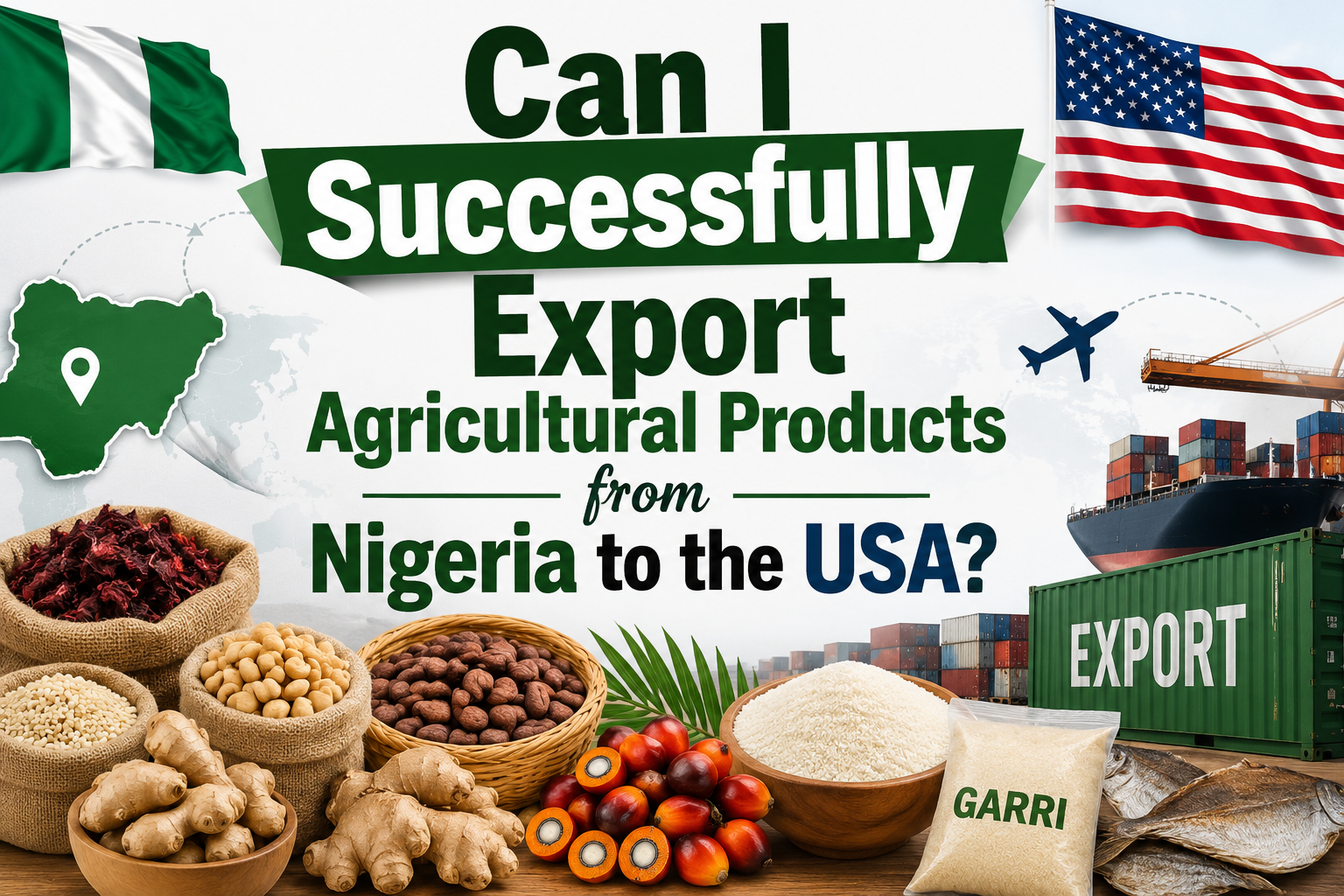

What if one of the most profitable export opportunities in Nigeria is already sitting in our farms, markets, and warehouses?
Every day, tons of Nigerian agricultural products are shipped across the world to meet growing demand from consumers, retailers, restaurants, and health brands looking for authentic African products. From sesame seeds and ginger to hibiscus, cocoa, garri, and dried fish, buyers in the United States are actively searching for quality products that Nigeria produces in abundance.
The opportunity is massive.
Millions of Africans living abroad want the foods they grew up eating. Health-conscious consumers are embracing natural products like hibiscus tea, moringa, and ginger. African grocery stores across Houston, Atlanta, New York, and New Jersey are constantly restocking shelves because demand continues to grow.
This means that a single Agricultural Product that may seem ordinary in Nigeria can become a highly valuable export commodity in the United States.
The exciting part is that you do not need to be a multinational company to take advantage of this opportunity. Many Nigerian entrepreneurs are already building profitable export businesses from relatively small beginnings, supplying agricultural products to buyers abroad and earning in dollars.
However, successful exporting requires more than simply packing products and sending them overseas.
The United States has strict import requirements. Buyers expect professional packaging, proper labelling, consistent quality, and reliable delivery timelines. One missing document, incorrect label, or customs issue can delay a shipment and quickly reduce your profits.
That is why understanding the export process is just as important as having a great product.
With the right preparation, proper documentation, and experienced export support, Nigerian businesses can successfully export agricultural products to the United States and tap into one of the world’s largest consumer markets. Companies like African Import Export Solution (AIES) help bridge that gap through export support, international shipping, warehousing, and logistics services designed to help African businesses grow globally.
The demand already exists.
The question is: are you ready to take your Agricultural Product beyond Nigeria’s borders and into the hands of international buyers?
Is Exporting From Nigeria Worth the Effort? Read this
Why Agricultural Products From Nigeria Are Growing Fast
Nigeria is blessed with agricultural products that are in high demand abroad. Not because they’re rare, but because they taste, look, and feel different from what people get in US supermarkets. Products like:
- Dried hibiscus leaves are sold as “zobo” to Nigerians, and sold as “hibiscus tea” to health stores at 3x the price.
- Sesame seeds: Nigeria is one of the top exporters globally; US bakers and tahini makers buy it in bulk.
- Cocoa: Raw Nigerian cocoa is still heavily prized for its flavor profile.
- Ginger: African ginger is high in oil content, which is why buyers keep coming back.
- Cashew nuts: Raw and processed, both have serious buyers in the USA.
- Palm oil: It’s hard to find authentic red palm oil in the US without paying import prices.
- Garri, yam flour, and plantain flour serve as staples for the diaspora now crossing over to other Africans and Caribbean communities.
In essence, Nigerians living in America still want the foods they grew up eating. You can’t get that exact taste from a substitute. African restaurants need ingredients that taste right, or risk customers walking out and leaving bad reviews. That demand creates a massive opportunity for Nigerian exporters.
What products can I export? Read this
So, Can You Legally Export Agricultural Products To The USA?
Yes, but you must follow the correct process. The USA has strict import rules, especially for food and agricultural products. US Customs and Border Protection, FDA, and USDA all have a say before your shipment clears. And they don’t make exceptions because “this is how we do it in Nigeria.”
Some products may require:
- Proper cleaning and processing
- Food-safe packaging
- Export documentation
- Inspection
- FDA compliance
- Phytosanitary certificates
- Proper labelling
If these things are not done correctly, your shipment may be delayed, rejected, or seized. And “delayed” at a US port means daily storage fees that eat your profit fast. This is why experienced export companies matter so much. They know which product needs which certificate, how to prep it for the FDA, and who to call when a document is missing.
You’re paying for them to keep your container moving. AIES focuses on helping African businesses scale internationally through logistics, export development, product sourcing, warehousing, export licensing, and shipping solutions. For first-time exporters, that kind of support is the difference between a one-time shipment and a business that runs monthly.
1. Hibiscus Leaves (Zobo)
Hibiscus is one of Nigeria’s biggest agricultural exports. It’s used for tea, drinks, and health products abroad. Walk into any health store in the US, and you’ll see “Hibiscus Tea” selling for $8-$12 a pack, but in Nigeria, it’s ₦500 a handful.
Why it sells:
- Used for herbal tea
- High antioxidant value
- Popular among African and health-conscious buyers
The trick is getting it clean and dry enough to pass FDA inspection. No stems, no moisture, no mold.
2. Sesame Seeds
Nigeria is one of Africa’s top sesame producers. The US doesn’t grow enough to meet demand, so they import. American food companies use sesame seeds in:
- Bread
- Snacks
- Oil production
- Health foods
This makes it one of the most profitable agricultural exports because volumes are large and buyers reorder monthly. Quality and low moisture content are everything here.
3. Ginger
Nigerian ginger is highly valued because of its strong flavor and high oil content. Chefs and spice companies notice the difference. It’s exported in:
- Fresh form
- Dried form
- Powdered form
The demand for natural spices in the USA continues to grow yearly. Post-COVID, people are cooking more at home and buying spices they trust.
4. Cocoa
Chocolate companies and food manufacturers buy cocoa globally, and Nigerian cocoa remains an important export product. Nigerian cocoa has a stronger, more earthy taste that works well in dark chocolate and baking blends.
What buyers actually check for:
- Proper drying: Moisture content below 7%. Anything higher and you’ll fail inspection.
- Fermentation: Done right, it develops the flavor, but skip it, and you’ve got bitter, low-value beans.
- Packaging: Clean jute bags, no foreign smell, and no contact with chemicals during storage.
5. Garri and Cassava Products
Many Nigerians in the diaspora buy garri regularly. It’s comfort food, and there’s no real substitute. The same goes for fufu flour, lafun, and plantain flour. The challenge is proper export packaging and compliance.
Garri absorbs moisture and odours like a sponge. If you pack it in a regular sack and ship it by sea for 5 weeks, it can arrive stale or moldy, and US buyers won’t reorder twice. Unlike fresh produce, garri has a shelf life if you package it right.
What Do You Need Before Exporting to The USA?
A lot of people think exporting is only for big companies with warehouses and lawyers. However, that’s no longer true. Even small businesses and individuals can export successfully if they follow the right process. You don’t need a 20-foot container on day one; what you need is the right setup so your first 50kg shipment doesn’t get stuck at the port.
Here are the major things you’ll need:
1. A registered business
You should register your business with CAC in Nigeria. This gives your business credibility and allows you to operate professionally. No serious US buyer will wire money to “John’s Agro Ventures” with no CAC number. It only takes 1-2 weeks, and it’s the cheapest credibility you can buy.
2. NEPC registration
Registration with the Nigerian Export Promotion Council (NEPC) is important for exporters. It officially recognizes you as an exporter in Nigeria and lets you access export incentives, training, and trade fairs. Think of it as your export ID card. Without it, you can’t clear some agricultural products through customs.
3. Quality packaging
Packaging matters a lot in international trade. Your products must look clean, professional, and safe for shipping. US buyers aren’t buying from a market stall. They’re buying for shelves and e-commerce customers who expect retail-ready packs.
4. Proper documentation
Exporting requires documentation like:
- Commercial invoice
- Packing list Export permits
- Phytosanitary certificate
- Bill of lading or airway bill
5. Reliable shipping partner
This might be the most important part. A trusted logistics company helps you:
- Avoid customs problems by filing the right paperwork
- Reduce delays by using the right route and warehouse
- Handle documentation so you don’t mess up the FDA prior notice
- Manage delivery from Lagos port to the buyer’s door
- Protect your shipment with proper handling and insurance
You can be the best garri producer in Ogun State, but if your logistics partner drops the ball, you can look unprofessional to the buyer.
The Shortcut Most People Miss
You don’t have to build all this yourself. Companies like AIES exist so you can focus on product and buyers while they handle registration, documentation, warehousing, and shipping.
Get these five pieces right, and you can export from your bedroom; get them wrong, and you’ll burn money fast.
So, Is Agricultural Export Profitable?
Yes, very profitable when done correctly. You’re selling in dollars to a market where a 50kg bag of hibiscus that costs ₦30,000 in Nigeria can retail for $400-$600 in the US. Even after shipping, packaging, and fees, the margin is real.
The key is understanding:
- Market demand: Don’t export what you like; export what people are already searching for and reordering.
- Product quality: US buyers pay for consistency. Same color, same dryness, same taste every shipment.
- Export regulations: FDA and USDA don’t negotiate. If your paperwork or packaging is wrong, the shipment will be held. That’s how new exporters lose money.
- Logistics: Shipping cost and time can make or break you.
- Buyer relationships: The exporters making money aren’t chasing 100 random buyers. They have 3-5 clients who reorder monthly. That’s how you get predictable income.
Some exporters start small and eventually build full-time businesses exporting agricultural products abroad. A lot of them start with 50-200kg air shipments, prove they can deliver, then move to sea freight.
The Future of Nigerian Agricultural Product Export Business
Ten years ago, “African food” in the US meant a tiny shelf in the back of an international store. Now you’ve got hibiscus on Whole Foods shelves, Nigerian jollof spice kits on Amazon, and TikTok creators doing “African grocery haul” videos with millions of views.
At the same time:
- African communities abroad are growing – more Nigerians, Ghanaians, and Kenyans settling in the US means more demand for staples that don’t change.
- E-commerce is expanding – you don’t need a physical store in Houston to sell to someone in Houston. Shopify, Amazon, and TikTok Shop handle that.
- International trade is becoming easier – digital documentation, better freight options, and logistics companies that specialize in Africa-US routes.
The global market already exists. African stores, restaurants, health brands, and diaspora households are buying weekly. The missing link for many people is understanding the export process and working with the right logistics partner.
With companies like African Import Export Solution (AIES) helping Nigerian businesses with export development, shipping, warehousing, and logistics, exporting to the USA is becoming more accessible than ever.
The global market is waiting, and your agricultural products could be next.
Final Thoughts
So, can you export agricultural products from Nigeria to the USA?
Absolutely.
In fact, the better question may be: Why aren’t more Nigerians taking advantage of this opportunity?
The demand already exists. Millions of consumers in the United States are actively buying African food products every day. African grocery stores are restocking shelves weekly. Restaurants are searching for authentic ingredients. Health-conscious consumers are paying premium prices for products like hibiscus, ginger, moringa, sesame seeds, and other natural agricultural products.
The market is not the problem.
The opportunity is not the problem.
The biggest challenge is understanding the process and executing it correctly.
The exporters who succeed are not necessarily the ones with the largest farms or the biggest budgets. They are the ones who understand compliance, maintain product quality, build strong buyer relationships, and work with reliable logistics partners who help them move products across borders efficiently.
You do not need to start with a container load of goods.
You do not need a multinational company.
You do not need years of export experience.
What you need is a quality product, the right documentation, proper packaging, a clear understanding of market requirements, and a dependable export support system.
Every successful exporter started somewhere. Many began with a small shipment, a single buyer, and a willingness to learn. Over time, those small shipments turned into repeat orders, long-term contracts, and thriving export businesses.
Nigeria has some of the most sought-after agricultural products in the world. From sesame seeds and cocoa to ginger, hibiscus, palm oil, garri, and cashew nuts, the global market is already buying what we produce.
The opportunity is real.
The demand is growing.
And the barriers to entry are lower than many people think.
At African Import Export Solution (AIES), we are passionate about helping African businesses access global opportunities through export development, logistics support, warehousing, documentation assistance, and international shipping solutions. Our goal is to help exporters move from uncertainty to confidence and from local markets to international success.
The global market is not waiting; buyers are already searching.
The question is whether your products will be among the next shipments leaving Nigeria for the United States.
Your next export opportunity could be closer than you think.
Awarded Most Reliable Shipping Company (2019-2023)

FAQs
Can I legally export agricultural products from Nigeria to the USA?
Yes. Nigerian businesses and individuals can legally export agricultural products to the USA as long as they comply with export regulations, FDA requirements, customs procedures, and any product-specific certifications required for entry into the United States.
Is NEPC registration required for agricultural exports?
In most cases, yes. Registration with the Nigerian Export Promotion Council (NEPC) is an important step for exporters and may be required for certain export transactions and documentation processes.
Do agricultural products need FDA approval before entering the USA?
Many food products must comply with FDA requirements before entering the United States. Depending on the product, this may include facility registration, proper labeling, FDA prior notice, and other compliance requirements.
What documents are required to export agricultural products from Nigeria?
Common export documents include:
- Commercial Invoice
- Packing List
- Certificate of Origin
- Phytosanitary Certificate
- Export Permit
- Bill of Lading or Airway Bill
Additional documentation may be required depending on the product and destination.
Why is packaging important when exporting agricultural products?
Proper packaging protects products during transit, extends shelf life, meets regulatory requirements, improves product presentation, and increases buyer confidence.
How can I find buyers for my agricultural products in the USA?
Potential buyers can be found through African grocery stores, food distributors, importers, online marketplaces, trade fairs, social media, Amazon, Shopify stores, and diaspora communities across the United States.
Can AIES help with agricultural exports from Nigeria to the USA?
Yes. African Import Export Solution (AIES) supports exporters through export logistics, documentation assistance, warehousing, shipping solutions, export development, product sourcing, and international trade support services designed to help businesses access global markets.
Next Step
Ready to start your Exportation business with little capital?


Leave a Reply