


One of the biggest myths stopping people from building a successful export business in Nigeria is the belief that exporting is only for wealthy business owners with millions of naira, large warehouses, and international connections.
The reality is very different.
Every day, ordinary Nigerians are exporting products such as food items, agricultural products, spices, fashion accessories, shea butter, and handmade goods to customers in the USA, UK, Canada, Europe, and other international markets. Many of these exporters did not start with huge capital. They started with a single opportunity, a willing buyer, and a clear understanding of the export process.
Yet one question continues to hold many aspiring exporters back:
How much does it really cost to start an export business from Nigeria?
It’s a valid question because nobody wants to invest money into a business without understanding the actual costs involved. Unfortunately, there is a lot of misinformation. Some people claim you need millions before you can export your first product, while others make it sound like you can start with almost nothing. The truth lies somewhere in between.
The good news is that starting an export business is often far more affordable than most people imagine. Your startup cost depends on factors such as the product you want to export, your target market, shipping method, packaging requirements, documentation, and business goals.
In fact, many successful exporters started with one small shipment, tested the market, learned the process, and gradually expanded into larger and more profitable operations.
The biggest challenge is rarely the amount of money required.
The real challenge is knowing where to invest, where to save, what costs are necessary, which expenses can be avoided, and how to prevent costly mistakes that can wipe out your profits before your business even gets started.
In this guide, we’ll break down the real cost of starting an export business from Nigeria, what you should budget for, and how to start smart without overspending.
If you have been asking:
- How much does export business cost in Nigeria?
- Can I start exporting with low capital?
- What are the hidden costs?
- What do I really need to pay for?
This article will give you the real picture.
What products can I export? Read this
First, Let’s Clear Up a Big Misunderstanding
Exporting is not one fixed business, and that is where many people make mistakes. The cost of exporting depends heavily on the product you are exporting, the country you are exporting to, your shipping method, product quantity, packaging requirements, certifications needed, and your business scale. Exporting dried pepper to Canada is different from exporting cosmetics to the USA. Shipping fashion items by air is different from shipping agricultural products by sea. One needs FDA compliance and specific labelling, the other needs phytosanitary certificates and cold chain handling.
So there is no single “official amount” needed to start exporting. Anyone who gives you a flat number without asking about your product and destination is guessing. But there are realistic cost ranges once you know your path.
The smart move is to match your budget to a realistic first shipment. Start small enough to learn the process without risking money you cannot afford to lose. Once you understand what buyers expect and how long each step takes, you scale up with better margins and fewer surprises.
The Good News: You Can Start Small
One of the best things about the export business today is flexibility. Years ago, exporting was mainly for large companies with warehouses, agents abroad, and six-figure budgets. Now, small businesses can export too, and many are doing it with one customer and one product.
The goal is not to fill a container on day one; the goal is to prove that a buyer will pay, receive the goods, and reorder. Some exporters begin by testing one international customer first before scaling. What matters more is choosing the right product for your budget, understanding what your market actually buys, and working with reliable export support systems that prevent delays and compliance issues.
The Main Costs of Starting An Export Business in Nigeria
Let’s break things down properly.
1. Business registration
If you want to export professionally, registering your business is important. It gives buyers confidence, and it is required for most export documentation. In Nigeria, business registration costs depend on the type of business, professional fees, and processing requirements. Many small exporters start with a simple business name registration through CAC before upgrading to a limited company later. Some exporters also process export-related licenses as they grow, like NEPC registration and product-specific permits. You do not need every license on day one, so start with the basics and add others as your buyer requests them.
African Import Export Solution (AIES) helps businesses with export licenses and documentation needed for international trade compliance. This support saves time when you are unsure which forms apply to your product.

2. Product sourcing costs
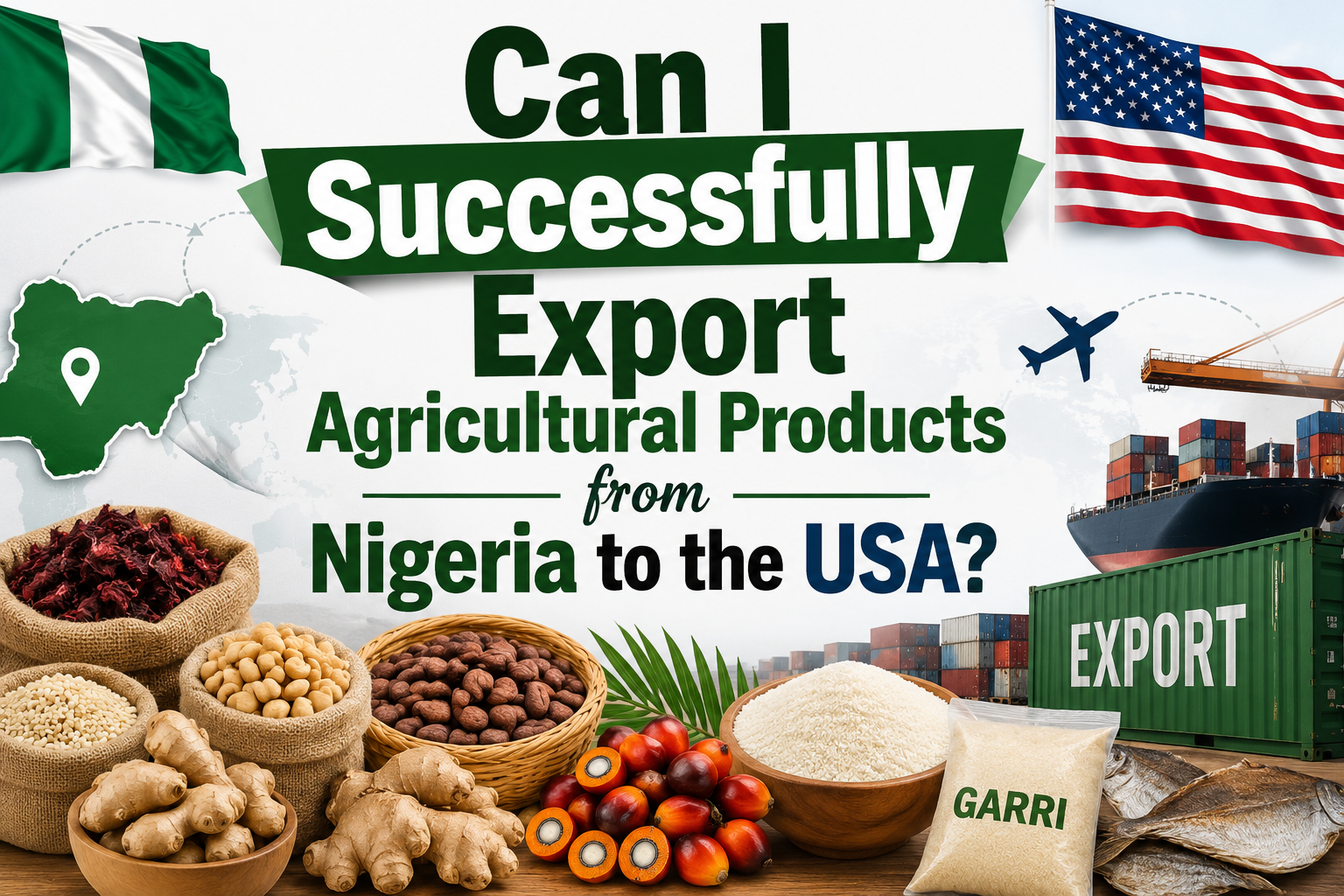
This is usually where most of your startup money goes, because you need inventory before you can ship anything. The amount depends on what you are exporting. Agricultural products like ginger, sesame seeds, hibiscus flowers, and cashew nuts can often be sourced directly from farmers or markets.
Buying in bulk from the source cuts costs, but you need to check quality and moisture levels before packing. Food products like garri, egusi, crayfish, and yam flour usually require proper packaging and hygiene preparation. Buyers abroad expect clean, dry, and well-sealed products that meet shelf-life standards. Fashion products vary by fabric quality, tailoring, branding, and quantity.
3. Packaging costs
This is one area many beginners underestimate badly, and it costs them sales. International buyers care about your presentation. Poor packaging can damage products in transit, reduce trust, create customs problems, or cause rejection at the warehouse. Good packaging usually includes:
- Clear labels
- Proper sealing
- Branding
- Export-safe containers, and
- Standard product information
4. Shipping Costs
This is one of the biggest parts of the export business, and honestly, it is the part that scares many beginners. Shipping costs depend on the destination country, product weight, shipping speed, shipping method, and cargo size. A 20kg box to London costs differently from a 200kg box to New York, and air freight is priced differently from sea freight.
Air shipping is faster but more expensive. It makes sense for food items, cosmetics, urgent deliveries, and smaller shipments where speed matters more than volume. Most first-time exporters start here because you can test demand with 30-100kg without waiting 6 weeks for delivery. Ocean shipping is cheaper per kg for large shipments. It works for bulk agricultural goods, large cargo, and commercial exports once you have confirmed buyers. This process is time-consuming and requires proper container packing and documentation.
African Import Export Solution (AIES) intervenes by offering global air shipping, ocean shipping, air cargo services, and warehousing support for African businesses exporting internationally. Using a consolidator like AIES often lowers your rate because your shipment goes with others in a shared container or air pallet, which cuts costs for small exporters.
5. Export Documentation
Export documentation is one of the most important parts of the business. Without proper paperwork, shipments face delays, storage fees, or rejection at customs. Depending on your product and destination, documentation may include:
- Commercial invoices
- Packing lists
- Certificates of origin
- Phytosanitary certificates for agricultural goods
- NEPC export permits, and shipping documents like the bill of lading or airway bill.
If you are sending food or skincare to the US, you may also need an FDA prior notice. Each document has a purpose, and mistakes in documentation can become expensive quickly through demurrage, storage, and lost buyer trust.
African Import Export Solutions (AIES) helps businesses handle export licenses and documentation for international trade compliance. That means you don’t need to spend weeks learning forms for a single shipment. You can focus on the product and the buyer while the paperwork is handled correctly the first time.
6. Product testing and certification
Not every product needs advanced certification immediately. If you are exporting fashion items or handicrafts, your buyer usually cares more about quality and finishing than lab reports. However, some products, especially food, cosmetics, and health-related items, may require product testing, regulatory approval, or quality checks before they can enter certain markets.
For example, agricultural exports to the EU or the US will need phytosanitary certificates and lab tests for aflatoxin or pesticide residue, and skincare products heading to the US may need ingredient compliance with FDA guidelines.
7. Marketing costs
You can have amazing products and still struggle if nobody knows about them. Many exporters now use:
- TikTok
- WhatsApp Business
- Amazon
- Shopify stores to attract buyers globally

These platforms let you show your product, share behind-the-scenes sourcing, and build trust before the first order. Marketing costs can include:
- Product photos,
- Social media ads
- Branding
- Website creation
- Online promotion
On a lighter note, you do not need all of this at once. Good lighting, clean photos, and a clear product story on Instagram can often bring the first international inquiry. Some exporters start organically by posting consistently, joining diaspora groups, and asking early buyers for testimonials. Once you see which product gets traction, you can invest in ads or a simple website to look more professional.
Hidden Costs Many New Exporters Ignore
This is where experience matters, because some costs only show up when something goes wrong.
1. Delivery delays
Late shipments damage customer trust faster than anything else. Buyers abroad plan around arrival dates, so if your goods arrive two weeks late because of documentation errors or missed flights, you can lose credibility and future orders. Reliable logistics matter a lot in export business, and cheap shipping that misses deadlines is not cheap at all.
2. Customs issues
Incorrect documentation can lead to delays, penalties, or seized goods, as a missing certificate or wrong HS code can hold your shipment at the port for days while fees pile up. Fixing it after the issue always costs more than getting it right before shipment.
3. Damaged goods
Poor packaging can destroy products during transportation. Crushed bottles, torn bags, and water-damaged boxes mean refunds, bad reviews, and wasted freight. It looks like a packaging cost, but it is really a sales cost.

4. Currency fluctuation
Exchange rate changes affect profits significantly when you quote in dollars but pay suppliers in naira. A 5% swing between payment and payout can wipe out your profit margin.
5. Storage costs
If products stay too long in warehouses or ports, extra charges can quickly apply. Demurrage and storage fees start small and can grow fast. This usually happens when the paperwork is incomplete or the buyer is not ready to receive.
How To Reduce Export Startup Costs
This is where smart exporters separate themselves.
- Start with one product.
Do not try exporting ten products immediately. Instead, master one product, understand its packaging, documentation, and shipping quirks, then add others. Focus beats spread when capital is limited.
- Start with one market.
Focus on one country or customer segment before expanding. Learning UK import rules is different from learning US FDA rules. Pick one, get it right, and use that process as your template.
- Use reliable logistics support.
Trying to figure out international shipping on your own can quickly become expensive through trial and error. Experienced logistics partners reduce avoidable mistakes by consolidating shipments, handling documentation, and advising on packaging standards. AIES works with exporters this way to cut delays and lower per-kg shipping rates.
- Learn before scaling
Many exporters lose money because they rush into large shipments without understanding the process beforehand. Instead, send a small test shipment, track every cost, fix the gaps, then scale. Knowledge saves money, and one small shipment teaches you more than ten blog posts.
Why Logistics Support Matters More Than Many People Think
One major reason exporters lose money is poor logistics coordination. It rarely shows up in your startup budget, but it shows up in your profit and loss. This includes:
- Delayed shipping that misses buyer deadlines.
- Customs confusion that leaves goods stuck at the port
- Poor communication between agents and buyers
- Damaged products from wrong packaging, and
- Bad documentation that triggers inspections and fees.
Each one is avoidable, but only if the exporter owns the process end-to-end. That is why many Nigerian exporters work with companies like African Import Export Solution (AIES). AIES provides logistics support, export development, warehousing, procurement, product sourcing, export licenses, and international shipping services designed to help African businesses scale globally.
So instead of chasing five different vendors for packaging, freight, and paperwork, you work with one team that handles every step.
The right support does not just move boxes; it prevents the delays, fines, and rejections that quietly erase profit margins. For a small exporter, that difference is often the gap between a one-time sale and a long-term buyer.
Final Thoughts
The biggest mistake many aspiring exporters make is waiting until they have “enough money” before they start.
The truth is that exporting is not reserved for people with massive capital, international offices, or large warehouses. It is for people who understand the process, manage their risks, and take consistent action.
You do not need to start with a container load of products. You do not need millions sitting in your bank account. What you need is a product people want, a clear understanding of your market, the right documentation, reliable logistics support, and a willingness to learn as you grow.
Many of today’s successful exporters started exactly where you are now. They began with a small shipment, tested the market, built relationships with buyers, learned from each transaction, and gradually expanded into larger opportunities. Their success was not determined by the size of their starting capital but by the quality of their decisions.
The real cost of exporting is not always the money you spend.
It is the opportunities you miss by waiting too long.
It is the buyers you never contact.
It is the markets you never test.
And it is the business growth you postpone because you believe you need more than you actually do.
If you approach exporting strategically, start with realistic goals, and work with experienced partners who can help you avoid costly mistakes, the journey becomes far more affordable and profitable than most people imagine.
At African Import Export Solution (AIES), we believe global trade should be accessible to every serious entrepreneur, regardless of business size. Through export support, documentation assistance, warehousing, logistics coordination, international shipping, and trade development services, we help businesses focus on growth while reducing the complexity that often discourages new exporters.
So if you’ve been asking yourself how much it costs to start exporting from Nigeria, the better question may be:
How much longer can you afford to delay an opportunity that could connect your business to customers around the world?
Start where you are.
Start with what you have.
Learn the process.
Build your confidence.
And let each successful shipment move you closer to the global business you want to build.
Awarded Most Reliable Shipping Company (2019-2023)

FAQs
Do I need a business partner to start exporting from Nigeria?
Yes. Many exporters start with small shipments and gradually scale their operations. Your startup cost depends on the product, destination, shipping method, and business model.
What is the minimum amount needed to start exporting from Nigeria?
There is no fixed amount. Some exporters start with relatively small test shipments, while others invest more depending on product volume, packaging requirements, and market demand.
Do I need to register my business before exporting?
Yes. Business registration improves credibility, supports documentation requirements, and is often necessary for professional export operations.
What hidden costs should exporters be aware of?
Common hidden costs include customs delays, storage charges, damaged goods, currency fluctuations, documentation errors, and delivery delays.
How can I reduce export startup costs?
Start with one product, focus on one target market, test with small shipments, use reliable logistics partners, and avoid unnecessary expenses until demand is proven.
Do I need export licenses and certifications?
Some products require specific licenses, permits, inspections, or certifications depending on the destination country and product category.
How can AIES help reduce export costs and risks?
African Import Export Solution (AIES) supports exporters with documentation, export licenses, international shipping, warehousing, logistics coordination, procurement support, and trade development services, helping businesses avoid costly mistakes and operate more efficiently.
Next Step
Ready to start your Exportation business with little capital?


Leave a Reply