


I remember sitting in my uncle’s small warehouse in Lagos, Nigeria watching him walk back and forth in a circle as he made several calls. He had just secured a huge deal to export his organic Shea butter to a beauty brand in the USA.
This was an amazing news!
But there was one major problem: he had no idea how to handle shipping from Lagos Nigeria to USA in the right and most cost-effective way. He got conflicting information from different sources, struggled with his documentation, and finally almost gave up because of unexpected costs.
Eventually, after weeks of trial and error, he found a reliable shipping partner, and that first export changed everything for his business.

Shipping goods from Lagos Nigeria to the USA can be complex, but with the right help, you can do it successfully.
This guide will break it all down for you, from choosing the right shipping method to handling customs clearance, so you can confidently expand your business beyond Nigeria.
Understanding the Potential to Export from Nigeria to USA
USA is one of the top importers of African goods, with Nigerian products making their mark in industries such as food, fashion, and raw materials.
In 2022 alone, U.S. imported over $6.7 billion worth of goods from Nigeria, with crude oil, agricultural products like sesame seeds and cocoa, and textiles leading the way.
On the other hand, Nigerian fashion, particularly Ankara prints and handcrafted leather goods, has gained recognition in global markets, while food products such as hibiscus flowers, Shea butter, and spices are increasingly sought after in the U.S.
Recognizing this potential can help you and other businesses export from Nigeria to USA, help more businesses tap into a vast consumer base of over 330 million people, increase revenue through exports, and help with economic growth back home.
Understanding the Right Shipping Process
Whether you’re a first-timer or seasoned exporter, understanding how to ship goods to the USA from Nigeria is key. The process involves several step. Here’s a basic overview of how it works:
- Know What You’re Shipping – Whether it’s food products, clothing, machinery, or raw materials, knowing your product category is crucial for compliance and cost estimation.
- Choose the Right Shipping Method – You can opt for sea freight or air freight, depending on your budget and urgency.
- Handle Documentation – Proper export documentation is essential to avoid delays or fines.
- Customs Clearance in Nigeria – Your shipment must pass through Nigerian Customs for inspection and approval.
- Shipping & Transit – Once cleared, your goods are transported to the USA.
- Customs Clearance in the USA – U.S. customs will inspect your shipment before allowing it into the country.
- Final Delivery – The goods are delivered to your buyer’s/receiver’s location.
Each step has its challenges, but if you plan ahead and work with a reliable logistic partner, the process can be smooth and stress-free.
Choosing the Right Shipping Service Provider:
Choose African Import Export Solutions

African Import Export Solutions (formerly ShiptoNaija) is a logistics company that helps individuals and businesses ship their goods between the U.S. and Nigeria. With over 150,000 customers and 3 million+ items shipped, they specialize in reliable, tax-free (Delaware-to-Nigeria) and insured deliveries using Air and Ocean freight services.
Their services go beyond just shipping, as they offer warehousing, business export training, U.S. company registration, and even product distribution through AfricanNatural.com and other platforms.
Why Choose African Import Export Solutions for your Air Shipping?
Global Air & Ocean Shipping
Increase your revenue with high-volume, low-cost, & speedy air and ocean shipments that are insured with full assurance of no seizures or delays.

- Bulk shipping discounts.
- Full insurance with money-back guarantee.
- 24/7 tracking and updates
- Doorstep pickup and delivery.
- Easy online booking.
- Responsive customer support.
Product Listing, Sales & Distribution in USA
Support for African brands looking to sell in bulk within the U.S. market, both online and in physical stores.
- Listing and Sales on AfricanNatural.com
- Distribution to African-owned retail stores
- U.S.-based sales representatives
- Digital marketing to reach U.S. audiences

Export Training & Development
Enjoy practical training that enables your businesses to identify the most profitable products for exports, as well as how to find buyers in USA and beyond who will pay in dollars.

- Finding the right buyers in the USA who will pay in $$$.
- Determining the most profitable and in-demand product to export.
- How to affordably ship abroad while ensuring that US customs never seize their items.
- What certifications and licenses do they need to ship and sell their products in the USA.
- How to find cost-effective warehousing so products can be delivered fast and cheaply to buyers abroad USA.
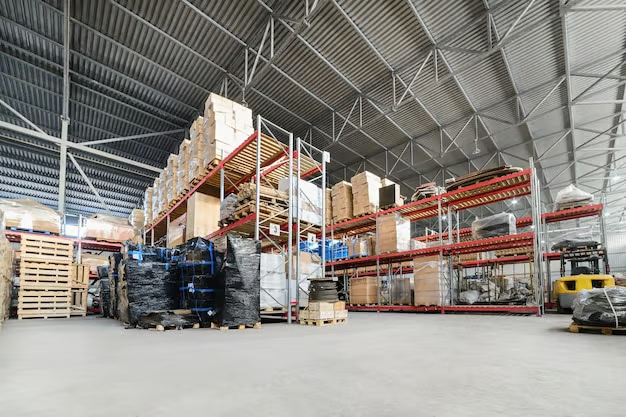
Warehousing in the USA
Save over 60% on shipping with faster delivery to your USA customer. With their US warehousing, service, you get.
- Storage for up to 3 pallets (3 CBM)
- Faster local fulfillment (2–3 business days)
- Real-time inventory management
- Better product availability for platforms like Amazon
- Lower international shipping costs per order
Licensing & Business Registration
Registration services to meet export and regulatory requirements for the U.S. and other markets.

- FDA registration (initial registration & renewal)
- U.S. company registration
- EORI license (for UK exports)
- Trademark services (local & international)
- Nigeria CAC business registration.
Step-by-Step: How to Ship from Lagos Nigeria to USA
Shipping from Lagos Nigeria to Nigeria is simple when you follow the right steps. The African Import Export web and mobile app makes the process faster, and more organized. From booking shipments to tracking your shipment in real time, here’s everything you need to get started and ship with confidence:
1. Sign Up and Log In
- Download the App: Start by downloading the African Import Export app from the App Store or Google Play Store.
- Create an Account: Sign up using your email address, set a secure password, and verify your email. Next, complete your KYC by uploading essential information, including a clear selfie and a valid ID card for immediate approval.
- Log In: As an existing user, you can simply use your log in details to log in to the app.
2. Book Your Shipment
- Create Shipment: Click on “Create Shipment” to book your shipment.
- Select Pickup/Drop-off/Walk-in: You can choose to drop off your shipment through a third-party at any of our office location, walk-in yourself to drop the shipment, and if you prefer convenience, we can collect your items from your home, office, or any location and deliver them to our office for processing.
- Input Details: That is to input the correct sender and receiver’s details, item information such as weight-and-dimension, content and the value of the item.
- Confirm Details: Review the shipment details and ensure all information is accurate, then create your shipment.
3. Prepare Your Shipment
- Packaging: Ensure your items are well-packaged. Use bubble wrap for fragile items, leak-proof containers for liquids, and vacuum-sealed packaging for food products.
- Labeling: Clearly label your packages with the recipient’s address and contact information.
- Documentation: Prepare necessary documents such as export invoices, permits, and customs forms.
- Make Payments: Ensure you make your full payment within 24-48 hours, to avoid delays in processing or delivery.
4. Track Your Shipment
- Real-Time Tracking: Use the app to track your shipment in real-time. You’ll receive updates on the shipment’s status and estimated delivery time.
- Notifications: Enable notifications to receive alerts about any changes or updates to your shipment.
5. Delivery
- Final Delivery: Once customs clearance is completed, your shipment will be delivered to the recipient’s address indicated before making payment.
- Confirmation: The app will notify you (and via mail) once the delivery is complete.
6. Post-Delivery
- Feedback: Provide feedback (via a call or mail) on your shipping experience through the app.
- Support: If you encounter any issues, use the app’s support feature to get assistance.
By following these steps and utilizing the African Import Export Solutions web & mobile app, you can be assured of a smooth and stress-free shipping experience from USA to Nigeria, as well as save time, money, and stress, allowing you to focus on growing your business.
Choosing the Right Shipping Method:
Air Freight vs. Sea Freight
Your choice between air freight and sea freight depends on what type of product you have. It also depends on your budget. Additionally, the speed at which you need delivery is important.

Air Express: You are guaranteed delivery in 3 to 5 business days to anywhere in Nigeria
Air Standard: Shipping your bulk items from Lagos Nigeria to USA through this option, you get to have your air freight delivered in 5 to 12 business days.
Sea Freight: Affordable and budget-friendly
Best for: Bulk shipments, non-perishable goods, furniture, raw materials.
Delivery time: 4-6 weeks.
Cost:

If you want to save costs on bulk shipping, sea freight is usually your best bet. But if you need fast delivery for small parcels, time-sensitive or perishable goods, air freight is worth the investment.
African Import Export Solutions provides both options, so you can choose what works best for your business.
Essential Documents for Shipping from Lagos Nigeria to USA
To avoid customs issues, you need to have the right paperwork. The most important documents include:
- Commercial Invoice – A detailed list of what you’re shipping and its value.
- Packing List – A breakdown of the package contents, including weight and dimensions.
- Bill of Lading (for sea freight) / Airway Bill (for air freight) – The official shipping document.
- Certificate of Origin – Proof that your goods are made in Nigeria.
- Export License (if required) – Some goods require an export permit from Nigerian authorities.
- FDA Approval (for food & drugs) – If you’re shipping food, cosmetics, or pharmaceuticals, the U.S. Food and Drug Administration (FDA) must approve them.
Note that: African Import Export Solutions can assist with all necessary documentation, ensuring your shipment complies with Nigerian customs laws.
Types of Goods Commonly Shipped from Nigeria

1. Processed Cocoa Powder
Can be sourced from: Ondo, Cross River, Ekiti
Why Export It: Nigeria is the world’s fourth-largest cocoa producer, and processed African Cocoa Powder is in high demand for the production of premium chocolates and artisanal baking.
FDA Requirement: Raw cocoa beans do not require FDA approval, but processed chocolate products do. If exporting cocoa butter, powder, or chocolate bars, you must register with the FDA’s Food Facility Registration system.
2. Shea Butter
Sourced directly from: Niger, Kwara, Kebbi
Why Americans Love It: With the rise of organic skincare, Nigerian raw and unrefined shea butter is in high demand, so why not tap into this profit-making business.
FDA Requirement: If exporting Shea Butter as a cosmetic ingredient, FDA registration is not required. However, if it’s labeled for skincare or food use, it must comply with FDA cosmetic or food regulations.
Tip: To access the U.S. cosmetics market, ensure your Shea Butter meets FDA labeling and safety guidelines.
3. Adire & Ankara Fabrics
Sourced from: Abeokuta, Lagos
Why Export It: African prints are trending in the fashion and design industry, interior decor, and crafts.
Tip: African Import Export Solutions can print U.S.-compliant barcodes for your Adire labels, making them store-ready.
4. African Black Soap
Can be sourced from: Ogun, Osun state
Why Export It: Chemical-free skincare is booming in the cosmetic industry, and African Black Soap is a top seller in most U.S. and Asian organic stores.
FDA Requirement: Cosmetic products like African Black Soap do not need prior FDA approval but must meet FDA labeling and ingredient disclosure regulations.
Tip: Label properly to pass FDA cosmetics regulations.
5. Dried Hibiscus Flowers (Zobo Leaves)
Sourced directly from: Kano, Jigawa, Borno
Why Americans Love It: Hibiscus tea is trending in the U.S. due to its high antioxidants and health benefits, making it a top seller in the herbal tea markets.
FDA Requirement: Dried hibiscus is classified as a food product. It must comply with FDA food facility registration and labeling regulations.
Tip: Vacuum-seal hibiscus flowers to maintain color and aroma, making them more attractive to premium buyers.
6. Plantain Chips
Sourced from: Oyo, Lagos, Ondo
Why Americans Love It: A popular snack in African, Caribbean, and Latino communities. Many U.S. stores are looking for authentic African-style plantain chips.
FDA Requirement: Plantain chips require FDA food registration and must meet U.S. packaging and labeling standards.
Tip: Use nitrogen-flushed packaging to keep chips crisp and fresh for longer.
7. Cashew Nuts
Sourced from: Kogi, Kwara, Oyo
Why Export It: Nigeria is one of the top cashew producers in the world. Raw and roasted cashews are highly sought after by organic and health-conscious consumers.
FDA Requirement: Cashews are regulated as food by the FDA and must be properly labelled and registered before export.
Tip: Raw cashews have a higher profit margin than processed ones, as U.S. buyers prefer to roast them locally.
8. Palm Oil
Sourced from: Edo, Delta, Cross River
Why Americans Love It: Used in cooking, cosmetics, and bio-diesel production. Red palm oil is especially popular in African and vegan communities.
FDA Requirement: Palm oil must be registered with the FDA as an edible oil. Proper labelling is required, and the product must be free of contaminants.
Tip: Always use BPA-free, leak-proof plastic jerrycans or drums to prevent spoilage and leakage during transit.
9. Locally Made Leather Goods (Bags, Shoes, Wallets)
Sourced from: Kano, Kaduna
Why Americans Love It: Handmade Nigerian leather is top-quality and sought after by luxury fashion brands and boutique stores.
FDA Requirement: Not required for leather products, but compliance with U.S. Consumer Product Safety standards is essential.
Tip: Partner with U.S. e-commerce platforms like African Natural Store, Etsy, Shopify, and Amazon handmade to reach fashion-conscious buyers.
10. Spices & Seasonings (Egusi, Ogbono, Suya Spice, Pepper Soup Mix)
Sourced from the Northern and Southern part of Nigeria
Why Americans Love It: West African cuisine is gaining mainstream popularity. Restaurants and home cooks seek authentic Nigerian spices.
FDA Requirement: All food seasonings must be FDA-registered and labelled with ingredient lists.
Tip: Pre-ground spices require testing for contaminants before entering the U.S.
11. Honey
Sourced from: Niger, Kaduna, Oyo
Why Americans Love It: Pure, raw honey from Nigeria is rich in antioxidants and preferred over processed alternatives. It’s widely used in organic food markets, skincare, and alternative medicine.
FDA Requirement: All honey imports require FDA registration and proper labeling. Ensure no additives are present.
Tip: To attract premium U.S. buyers, label your honey as “100% Raw and Unfiltered”.
12. Kuli-Kuli (Groundnut Snack)
Sourced from: Northern Nigeria (Kaduna, Kano, Niger)
Why Americans Love It: This crunchy, protein-packed snack is a favorite among West Africans living in the U.S.
FDA Requirement: FDA food facility registration is mandatory. Ensure compliance with U.S. food safety regulations.
Tip: Export in resealable, airtight packaging to extend shelf life.
13. Dried Fish (Stockfish, Catfish, Tilapia, Crayfish)
Sourced from: Rivers, Delta, Bayelsa, Lagos
Why Americans Love It: Nigerian dried fish is a staple in African, Caribbean, and Asian cuisines, making it a hot commodity in ethnic food stores across the U.S.
FDA Requirement: Must be registered with the FDA as a seafood product and pass inspection for contaminants like mercury.
Tip: Vacuum-seal dried fish in oxygen-barrier bags to prevent moisture and preserve freshness.
14. Garri (Cassava Flakes)
Sourced from: Oyo, Ogun, Delta, Edo
Why you should export it: Garri is a household staple among West African immigrants, making it a must-have in African grocery stores.
FDA Requirement: FDA registration is required, and garri must be free from contaminants and properly labeled.
Tip: Export Ijebu Garri (fine-textured) & Yellow Garri separately, as they have different buyer preferences.
15. Nigerian Artworks (Wood Carvings, Beaded Masks)
Sourced from: Benin, Osun and Abuja State.
Why Americans Love It: Nigerian artwork is highly valued in U.S. art galleries, museums, and interior design markets.
Cultural Heritage Permit Required: Some historical artworks require permits from the Nigerian National Commission for Museums and Monuments (NCMM) before export.
Tip: Get appraisals and authenticity certificates to increase artwork value for collectors.
16. Gemstones (Tourmaline, Sapphire, Aquamarine, Garnet)
Sourced from: Nasarawa, Kaduna, Bauchi, Taraba
Why Americans Love It: Nigerian gemstones are in high demand in the U.S. jewellry industry, especially for ethical and conflict-free sourcing.
Export License Required: All mineral exports require an export license from the Nigerian Mining Cadastre Office (MCO).
Tip: Work with U.S. jewelers through platforms like Etsy and eBay for direct sales.
17. Moringa Powder & Herbal Products
Sourced from: Northern & South-Western Nigeria
Why Americans Love It: Moringa is classified as a super-food, making it popular in health-conscious and vegan communities.
FDA Requirement: Moringa powder is classified as a dietary supplement and must be FDA-registered.
Tip: Label as “USDA Organic Certified” (if applicable) to increase trust and sales.
18. Ginger & Turmeric Powder
Sourced from: Kaduna, Kano, Plateau
Why Americans Love It: Used in spices, herbal medicine, and wellness drinks.
FDA Requirement: Must be FDA-registered and free from aflatoxins and contaminants.
Tip: Export in dried powder form for higher market value.
19. African Beaded Jewelry
Sourced from: Abuja, Lagos, Benin
Why Americans Love It: Handmade African jewellry is popular in U.S. festivals, craft markets, and Afrocentric fashion stores.
Tip: Partner with U.S. brands on Etsy and Shopify for higher exposure.
20. Palm Kernel Oil
Sourced from: Delta, Edo, Ondo
Why Americans in Diaspora Love It: Used in soaps, cosmetics, and bio-fuel production.
FDA Requirement: Must be registered as an industrial or food-grade oil.
Tip: Highlight cold-pressed extraction methods to attract organic and natural product buyers.
Leveraging AGOA for Duty-Free Access to the U.S. Market
One of the biggest opportunities for Nigerian exporters is the African Growth and Opportunity Act (AGOA), a U.S. trade policy that allows duty-free entry for thousands of African products. If you’re exporting eligible goods, such as textiles, agricultural products, and handicrafts, you can benefit from zero tariffs, making your products more competitive in the U.S. market.
So, how can you take advantage of AGOA?
- Check if your product qualifies under AGOA’s duty-free list (agriculture, apparel, handmade goods, etc.).
- Ensure compliance with U.S. quality and safety standards to avoid customs rejection.
- Register your business with the Nigerian Export Promotion Council (NEPC) to access export support and training.
- Work with a shipping partner like African Import Export Solutions to streamline documentation and logistics.
If you’re serious about expanding your business to the USA, AGOA is an opportunity you shouldn’t overlook, it can reduce costs and make your products more attractive to U.S. buyers.
Conclusion
Shipping from Lagos Nigeria to the USA is a goldmine of opportunities for entrepreneurs who understand how to ship goods to the USA from Nigeria effectively. If you take the right approach, comply with regulations, and leverage the right support, your business can thrive in the international market.
The world is waiting: are you ready to seize the opportunity?
FAQs
What are the most exported Nigerian products to the USA?
Electronics and Gadgets: Items like smart-phones, laptops, and gaming consoles are popular due to Nigeria’s tech-savvy population.
Fashion and Apparel: Clothing, shoes, and accessories from Canadian brands are highly valued in Nigeria.
Agricultural products: like sesame seeds, cocoa, hibiscus, and raw materials.
What documents are needed for export from Nigeria?
• NXP form, commercial invoice, export license, and certificates of compliance.
How can I avoid shipping delays?
• Proper documentation, working with a reliable freight forwarder, and ensuring compliance with customs regulations.
Can I ship small packages to the USA?
Yes! Air freight services like DHL, FedEx, and African Import Export Solutions offer small parcel shipping.
Do I need an export license?
It depends on what you’re shipping. Some goods, like food and pharmaceuticals, require additional approvals.
How do I reduce shipping costs?
Consolidate shipments, use sea freight for bulk goods, and work with a logistics company to get the best rates.
How long does shipping take from Lagos to the USA?
Air freight takes 5-10 days, while sea freight can take 4-6 weeks.
Got More Questions?



Leave a Reply