

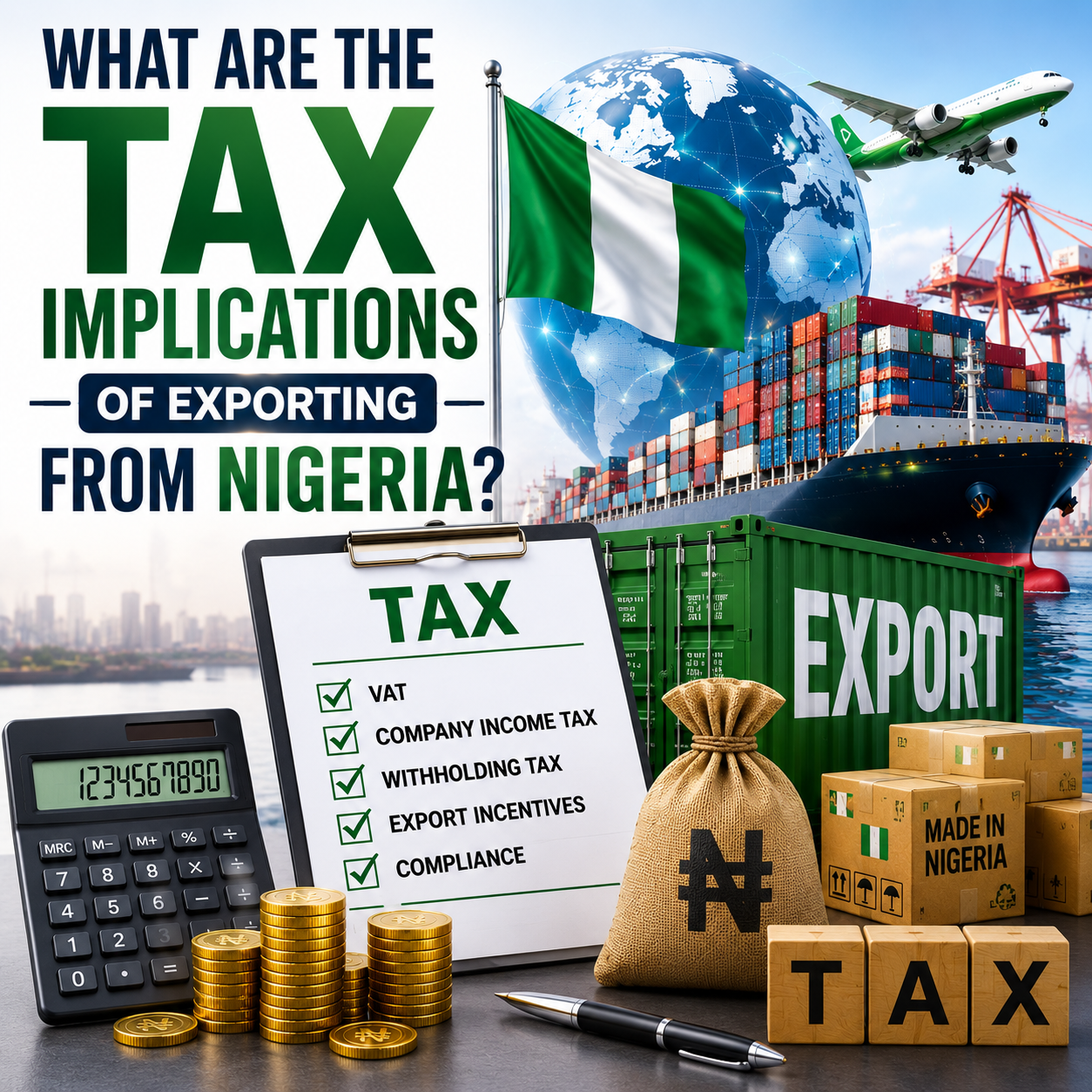

Tax Implications are one of the most overlooked aspects of starting an export business. If you ask most Nigerians why they want to start exporting, the answer is usually straightforward: “I want to earn in dollars.” And that makes complete sense. Nigerian products are gaining more attention across global markets, and exporting is no longer just a side hustle for many entrepreneurs. It has become a serious opportunity to build wealth, expand a brand, and reach customers around the world.
However, while most new exporters focus on products, buyers, and shipping, they often pay little attention to tax obligations and compliance requirements until challenges begin to appear.
The excitement of securing a foreign buyer and receiving payments in foreign currency can make people move quickly. Then suddenly, terms such as VAT, export documentation, withholding tax, company income tax, foreign exchange regulations, and reporting requirements begin to surface. Without understanding these tax implications, some businesses end up paying unnecessary charges, missing compliance requirements, or reducing their profits without realizing it.
The good news is that exporting from Nigeria can offer significant advantages when it comes to tax treatment and government incentives. Many export activities enjoy benefits that are designed to encourage businesses to compete internationally and bring foreign exchange into the country.
Understanding the Tax Implications of exporting allows you to structure your business properly, take advantage of available incentives, remain compliant with regulations, and protect your profits as you grow.
In this guide, we’ll break down the most important tax implications exporters need to understand, explain how export taxes work in Nigeria, and show you how to avoid costly mistakes while building a successful international business.
Do You Want To Know Which Countries Buy the Most Nigerian Exports? Read this
First, Is Exporting from Nigeria Tax-Free?
This is one of the most common questions and biggest misunderstandings among people entering the export business. Many assume that once your goods leave Nigeria’s shores, taxes will disappear completely. Exporting from Nigeria can be very tax-friendly, but it is not entirely tax-free.
You won’t face the heavy tax burden that often applies to businesses selling only within Nigeria. However, certain charges, levies, and compliance requirements can still apply. The actual cost depends on how well you understand and follow the rules.
Here’s what determines your tax situation:
- The type of product you export
- The country you’re exporting to
- Whether your business is properly registered
- The payment method and how proceeds are received
- The documentation you provide
- Whether your goods are raw or processed
At the same time, you may still encounter small administrative levies, customs processing fees, or compliance costs. The goal of the system is to make exporting easier and more rewarding, not completely free of all obligations. Understanding these realities early helps you price your products correctly, avoid surprises, and run a smoother, more profitable business. Many new exporters lose money not because the market is bad, but because they didn’t plan for the full picture.
The Major Tax Implications of Exporting from Nigeria
Exported Goods Are Generally Zero-Rated for VAT
One of the biggest benefits exporters enjoy in Nigeria is VAT exemption on exports. Under Nigerian tax law, exported goods are classified as zero-rated for Value Added Tax. That means you do not charge VAT on exported goods, international buyers are not expected to pay Nigerian VAT, and your export invoices can carry 0% VAT.
This is good news because it makes Nigerian goods more competitive internationally. Imagine selling Shea butter to a buyer in Canada. If you had to add 7.5% VAT on top of your price, your product could look more expensive compared to suppliers from Ghana or Indonesia. The VAT exemption removes that extra cost and helps you stay competitive globally. However, you must be able to prove that the goods actually left Nigeria. The tax authorities won’t just take your word for it. You need documents like:
- Nigeria Export Proceed Form
- Bill of Lading or Airway Bill
- Customs export documents and shipping records to back up your claim.
Without proper documentation, they may treat the sale as a local transaction and later demand VAT payment, plus penalties.
The Export Expansion Grant (EEG)
Many exporters don’t even know this exists. The Nigerian government created the Export Expansion Grant to encourage non-oil exports and support businesses earning foreign exchange for the country. The EEG is designed to reward exporters who bring in foreign revenue by giving them incentives that can offset some operational costs.
This is important because exporting can be expensive. Between packaging, shipping, documentation, customs clearance, international compliance, warehousing, and logistics, the costs can add up quickly. Every small financial support helps you stay profitable, especially in the early years when margins are thin.
Businesses exporting processed agricultural products, manufactured goods, and value-added products usually benefit more from these programs than exporters of raw materials. The government wants to reward value addition, not just raw exports. If you’re processing ginger into powder, turning sesame into oil, or packaging dried fruits for retail, then you’re in a stronger position to qualify.
Company Income Tax Still Applies
Many new exporters are surprised to learn that even with VAT exemption on exported goods, Company Income Tax (CIT) can still apply to your business profits. Selling abroad doesn’t automatically free you from tax obligations at home. The Nigeria Revenue Service still expects proper reporting and compliance if your export business is making money.
That said, Nigeria does offer real relief. Profits earned from non-oil exports can be exempt from Company Income Tax, but only if you bring the earnings back into the country through official banking channels, such as a domiciliary account. This rule encourages exporters to contribute to Nigeria’s foreign reserves. The exact tax you pay depends on a few practical factors, like:
- Your company’s annual turnover
- Whether you qualify as a small or medium-sized business
- How well you document your export activities
Under recent tax reforms, smaller businesses with lower turnover often enjoy reduced rates or certain exemptions. However, you still need to register with the tax authorities, file your returns on time, and maintain clear records.
Some Agricultural Exports Face Restrictions and Levies
Nigeria encourages exports, but the government also tries to protect local supply and economic stability. Because of this, some products occasionally face export restrictions, regulatory approvals, commodity levies, and special permits. It happens more often with agricultural commodities and raw materials where the government wants to make sure there’s enough left for the local market.
For example, certain food exports may require certifications from agencies like NAFDAC, SON, and the Nigerian Agricultural Quarantine Service. These approvals take time and cost money, and failing to get them can delay shipments or increase costs at the port.
Some exporters wrongly assume export taxes are the only thing that matters. In reality, compliance costs can become a hidden “tax” if you’re not prepared. A shipment held up for two weeks because of missing quarantine clearance can wipe out your profit margin. The best way to avoid this is to check the rules for your specific product before you sign a contract with a buyer. Know what permits you need, how long they take, and what they cost.
Foreign Exchange Regulations Matter
One major part of export taxation that many people ignore is foreign exchange compliance. When you export goods from Nigeria, the government expects export proceeds to come back into the Nigerian banking system properly. This is where the Nigeria Export Proceed form becomes very important. The NXP helps track export transactions and foreign exchange inflows so the Central Bank can monitor how much foreign currency is entering the country.
Improper handling of export payments can create issues with banking compliance, FX regulations, tax reporting, and international payment verification. This is especially important now because Nigeria closely monitors foreign exchange inflows, so if your buyer pays you into a personal account abroad or through informal channels, you may face problems when you try to clear future shipments or access export incentives. Exporters who follow proper channels avoid unnecessary complications later.
Customs Documentation Can Affect Your Costs
Documentation mistakes can be very costly. One small error on your paperwork can turn a smooth shipment into a financial headache. Wrong HS codes, incomplete paperwork, undervaluation issues, or missing permits can often lead to shipment delays at the port. And when that happens, you start paying customs penalties, storage charges for the days your goods sit in the warehouse, and sometimes the buyer can reject the shipment entirely. By the time you fix everything, the profit you expected is gone.
This is why experienced exporters don’t handle international shipping carelessly. They know that customs officers are not interested in your good intentions; instead, they look at the documents in front of them. If the description doesn’t match the goods, if the numbers don’t add up, or if a permit is missing, then the container doesn’t move.
The smartest businesses work with export professionals who understand customs procedures properly. Freight forwarders, licensed customs agents, and export consultants deal with this daily; they know which codes apply to your product, what documents are required for each destination, and how to avoid the common mistakes that trigger inspections. Paying for that expertise upfront is usually cheaper than paying for the mistakes later.
Double Taxation and International Sales
As your export business grows, you may eventually face another important consideration: double taxation. This happens when the same income gets taxed in both Nigeria and the buyer’s country. You complete a sale, receive payment, and bring the money home, only to discover that the destination country also expects its share of tax because the transaction was linked to their market. It can feel unfair, especially for smaller exporters who are already managing many costs, but this is a common reality in international trade.
How AfricanIES Helps You Shop in the USA Without Paying Sales Tax
One of the lesser-known ways importers lose money when shopping from the USA is through sales tax. Depending on the state where your items are delivered, you could pay anywhere from 5% to 10% or more in additional charges before your products are even shipped to Nigeria.
AfricanIES helps you avoid this cost through our Delaware warehouse address.
Delaware is one of the few states in the USA that has 0% state sales tax. When you use your AfricanIES Delaware warehouse address as your checkout address while shopping online, you can legally purchase from many US stores without paying state sales tax.
This means:
- More savings on every order
- Lower overall product costs
- Better profit margins for importers and resellers
- Reduced landed cost when shipping to Nigeria
Whether you’re buying from Amazon, Walmart, eBay, Costco, Best Buy, Macy’s, or thousands of other US retailers, using your AfricanIES Delaware address can help you save money before shipping even begins.
After your items arrive at our warehouse, AfricanIES receives, processes, consolidates, and ships them directly to Nigeria through our reliable air and ocean shipping services.
Do you want to shop and ship from the US tax-free? Ship now
Why Smart Exporters Focus on Value Addition
One of the smartest moves you can make as a Nigerian exporter is shifting from raw materials to value-added products. Many businesses start by exporting raw goods because it may feel simpler. But over time, they realize the real money and the bigger opportunities lie in processing, packaging, and branding.
Raw products like ginger, cocoa beans, or Shea nuts often face strong price competition in the international market. Buyers can easily compare prices from different countries and push for the lowest cost, which leaves you with thin profits. On the other hand, processed and packaged products such as ginger powder in branded retail packs, ready-to-use cocoa butter, or finished Shea butter skincare creams have higher prices, as international buyers are willing to pay more for convenience.
How Nigeria Helps Reduce the Risk
Nigeria has Double Taxation Agreements (DTAs) with several countries. These treaties help prevent you from paying tax twice on the same income. They set clear rules on which country has the right to tax certain types of income and often provide relief or credits for taxes already paid abroad.
Some of the countries with active agreements with Nigeria include the United Kingdom, Canada, France, China, the Netherlands, South Africa, and Singapore, among others. For most small and medium exporters, double taxation may not become an immediate issue, especially if you’re simply shipping goods without having a physical presence like an office or warehouse in the buyer’s country.
Real Benefits of Value Addition
- Higher Profits: The same quantity of raw ginger can earn significantly more when exported as dried slices or fine powder in attractive packaging.
- Better Incentives: Government schemes like the Export Expansion Grant (EEG) and other support programmes often favour exporters who add value. These businesses create more jobs and bring in higher foreign earnings, which aligns with national goals.
- Stronger Buyer Relationships: Finished products are easier for buyers to sell directly on their shelves. This makes you a more reliable long-term partner rather than just another raw material supplier.
- Tax and Compliance Advantages: Value-added exports often qualify for stronger tax benefits, including better treatment under export incentives and easier access to duty drawbacks on imported inputs.
When you add value, your business becomes more attractive to the system. You’re more likely to enjoy the full benefits of VAT zero-rating, potential Company Income Tax relief, and grants designed to support processed exports.
Conclusion
The truth is, exporting from Nigeria gives you real advantages such as VAT exemption, incentives, and growing global demand, but only if you treat the paperwork and planning with the same seriousness you treat the product.
Mistakes with accounts, codes, and records won’t show up until a shipment is stuck or a buyer walks away, and by then it’s too late. If you fix these basics now and move toward value-added products, you stop giving money away to avoidable errors and start building a business that buyers can trust.
Awarded Most Reliable Shipping Company (2019-2023)

FAQs
Do exporters pay tax in Nigeria?
Yes. Exporters may still have certain tax obligations, depending on the nature of their business and income. However, exports often enjoy special tax incentives and exemptions designed to encourage international trade and foreign exchange earnings.
What are the main tax implications of exporting from Nigeria?
The major tax implications exporters should understand include:
- Value Added Tax (VAT)
- Company Income Tax (CIT)
- Withholding Tax (WHT)
- Export incentives
- Foreign exchange regulations
- Documentation and compliance requirements
Is VAT charged on exported goods from Nigeria?
Generally, exports are treated as zero-rated for VAT purposes in Nigeria. This means qualifying export goods are usually not subject to VAT, provided the exporter can provide the required documentation and evidence of export.
Are there tax incentives available for exporters in Nigeria?
Yes. The Nigerian government provides various export promotion incentives designed to encourage non-oil exports, increase foreign exchange earnings, and support business growth.
Can poor tax compliance affect my export business?
Absolutely. Poor compliance can lead to:
- Regulatory penalties
- Delays in processing export documents
- Financial losses
- Difficulties accessing incentives
- Challenges with banking and foreign exchange transactions
What is the biggest tax mistake new exporters make?
One of the most common mistakes is assuming that tax obligations do not apply simply because a product is being exported. Successful exporters take time to understand the tax implications, maintain proper records, stay compliant, and seek professional advice when necessary.
How can AfricanIES help exporters understand tax implications?
African Import Export Solutions (AfricanIES) supports exporters through:
- Export training and education
- Export documentation assistance
- Compliance guidance
- Export readiness support
- Logistics and shipping solutions
- International trade advisory services
Our goal is to help African businesses navigate export requirements more confidently and build sustainable international operations.
Next Step
Ready to start an export business?


Leave a Reply