

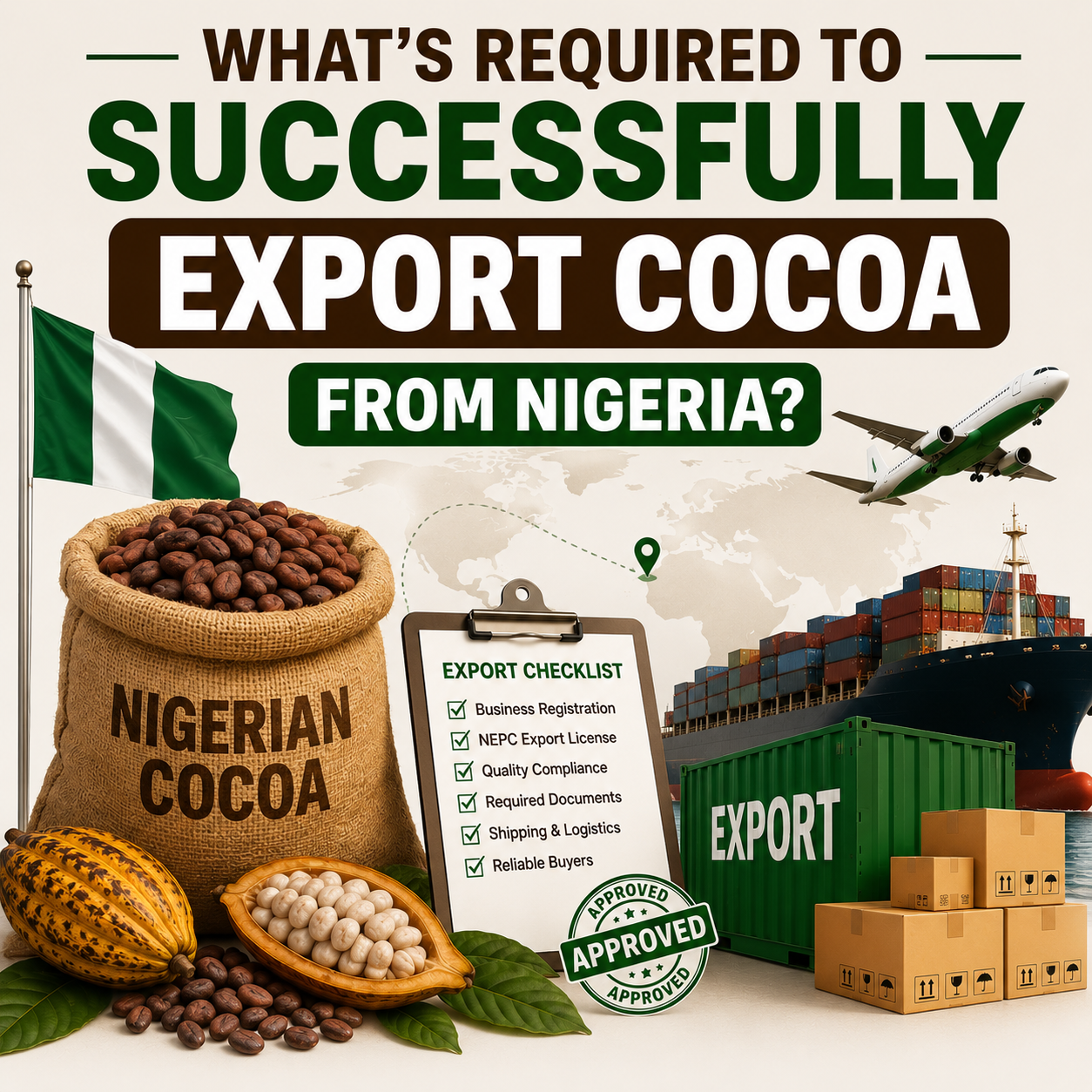

Nigeria is sitting on one of the most profitable agricultural export opportunities in the world, and it’s called cocoa.
Every year, international buyers purchase millions of dollars’ worth of cocoa from producing countries, and Nigeria remains one of the most important suppliers. From Europe and North America to Asia and the Middle East, manufacturers, chocolate producers, and food processing companies continue to look for reliable sources of premium cocoa beans. This growing demand creates a huge opportunity for entrepreneurs looking to export cocoa from Nigeria and earn in foreign currency, yet despite the opportunity, many people never take action.
Some believe you need millions of naira to start, while others think only large companies with government connections can enter the industry.
Many are discouraged by stories of rejected shipments, complicated documentation, customs delays, fake buyers, and export regulations they don’t fully understand.
The result?
Thousands of aspiring exporters stay on the sidelines while experienced cocoa exporters quietly build profitable businesses and generate steady income from international markets.
The truth is that most successful exporters are not doing anything secret or extraordinary. They understand the process, the quality standards buyers expect, understand the documentation required, and work with the right logistics and export partners.
Most importantly, they follow a proven system that allows them to export cocoa from Nigeria successfully and consistently.
This guide is different from the generic advice you’ll find on many websites.
Instead of vague information, you’ll learn the practical requirements, key documents, quality standards, export procedures, and business considerations involved in exporting cocoa from Nigeria. You’ll also discover the common mistakes that cost new exporters money and how to avoid them before they become expensive problems.
At African Import Export Solutions (AIES), we’ve seen firsthand how proper guidance can turn a complex export process into a straightforward business opportunity. Whether you’re a farmer, trader, aggregator, entrepreneur, or business owner looking to enter international markets, understanding how to Export Cocoa From Nigeria correctly can open the door to a growing global industry with significant profit potential.
If you’re serious about building a cocoa export business, this guide will show you exactly what it takes to get started and succeed.
Read this to Know How To Handle Customs Without Delays When Exporting From Nigeria
The Rising Opportunity to Export Cocoa From Nigeria

Before we get into the paperwork and requirements, let’s talk about why so many people are paying attention to cocoa right now and why more entrepreneurs want to export cocoa from Nigeria.
Nigeria is one of the world’s leading cocoa-producing countries. States like Ondo, Cross River, Osun, Ekiti, Ogun, and Edo produce thousands of tons of cocoa every year, and international buyers actively seek Nigerian cocoa because of its quality, flavor profile, and reliability. This growing demand is one of the biggest reasons why the opportunity to export cocoa from Nigeria continues to attract businesses looking to earn in foreign currency.
Global chocolate manufacturers, food processing companies, cosmetic brands, and pharmaceutical businesses all depend on cocoa as a key raw material. From chocolate bars and cocoa powder to beverages, skincare products, medicines, and confectionery, cocoa remains an essential ingredient in countless products consumed around the world. And as demand for these products continues to grow, the need to export cocoa from Nigeria becomes even more important. For exporters, this creates a significant opportunity.
If you can source properly fermented and dried cocoa beans, meet international quality standards, and manage the export process correctly, you can build a profitable business that earns in dollars, euros, pounds, and other foreign currencies.
The good news is that you don’t need to own a cocoa farm to export cocoa from Nigeria successfully.
Many exporters work directly with farmers, cooperatives, aggregators, and suppliers. They purchase cocoa beans in bulk, prepare them to meet export standards, and coordinate international shipments to buyers across the world. The demand already exists.
The supply is already here in Nigeria. The businesses that learn how to export cocoa from Nigeria efficiently and consistently are the ones positioning themselves to benefit from one of the country’s most valuable agricultural export opportunities.
What’s Required to Export Cocoa From Nigeria?
Let’s go step by step.
- Register Your Business Legally
You can’t export professionally without a registered company. The Corporate Affairs Commission, CAC, is where this starts. Most exporters register either as a business name or as a limited liability company. If you plan to deal with serious international buyers, going the limited company route gives you more credibility and shows you’re running a proper business, not just trading on the side.
When you register, make sure export activities are included in your business description. This is important because banks and government agencies will check it when you apply for export accounts and documents. Without CAC registration, you’ll get stuck before you even start.
- Get Your NEPC Export License
Another one of the most important documents you need is the NEPC Export License. This certificate, issued by the Nigerian Export Promotion Council (NEPC), officially registers you as an exporter in Nigeria. Without it, you cannot process any export transaction through Nigerian banks, and your goods will likely be stuck at the port.
With your NEPC license in hand, you can:
- Export cocoa legally and confidently
- Open an export account with any commercial bank
- Process all your export documents smoothly
- Access government incentives and support programs
- Build instant credibility with serious international buyers
For anyone serious about exporting cocoa from Nigeria, this is not optional; it’s your foundation. Everything else (quality checks, shipping, and payments) becomes much easier when you have this license.
- Source High-Quality Cocoa Beans

This is where most exporters either build a good reputation or lose money fast. International buyers don’t just buy any cocoa; they want beans that are properly fermented, dry enough to store, clean, and free from mould or bad smell. If your cocoa is wet, poorly fermented, or mixed with dirt and stones, it’ll get rejected at inspection, and you’ll pay for it in lost money and damaged trust.
Export-grade cocoa should have a good aroma, low moisture, a clean appearance, and be packed in the right bags. It’s very basic, but you’d be surprised how many shipments fail because of this one step. That’s why smart exporters work with trusted farmers, aggregators, or commodity suppliers they can rely on. Some even go to the farms themselves to check the beans before buying. In cocoa export, your product is your reputation; one bad shipment can close doors that took months to open.
- Understand International Cocoa Standards

Exporting isn’t just about buying goods and shipping them out. Every country has its own import rules, and you need to meet them before your goods clear customs abroad. Depending on the buyer and destination, you may need documents like:
- Phytosanitary certificates
- Fumigation certificates
- Quality analysis reports
- SGS inspection
- Moisture test reports
- Certificate of origin
European buyers, for example, are very strict about cocoa quality, sustainable practices, and chemical residue levels. They want to know where the cocoa came from and how it was handled. Learning these standards ahead of time gives you an edge, so you’ll know what to ask for when sourcing, and you won’t get caught off guard when the buyer requests specific tests.
- Find Reliable International Buyers
You can have high-quality cocoa ready to ship, but without the right buyer, you won’t even begin. But the problem isn’t just finding someone who says they want to buy; it’s finding someone who’s real, pays on time, and is serious about building a long-term relationship.
Too many new exporters meet fake buyers online, send samples, and lose money. Real buyers don’t work that way. You can find buyers through:
- International trade fairs
- B2B marketplaces
- Export networks
- Commodity brokers
- Referrals
- Export communities
Getting the buyer is only half the job; you also need to negotiate terms that protect you. That means knowing how pricing works, which Incoterms apply, what payment method is safe, who handles shipping, and when delivery is expected.
- Arrange Proper Packaging
Packaging is one of those details that seems small until it costs you an entire shipment. Cocoa beans need to breathe and stay dry during the long trip overseas. That’s why export-grade cocoa is usually packed in strong jute bags. They allow air flow, prevent moisture build-up, and hold up better than regular sacks.
Your packaging has to protect the cocoa, keep moisture out, meet whatever specifications the buyer asks for, and make handling and transport easier. If the bags tear or the beans get damp, you’re looking at rejected goods and a hit to your reputation. Good packaging also tells the buyer you know what you’re doing.
- Understand Shipping and Logistics
You need to know how your cocoa moves from Nigeria to the buyer’s warehouse. Most exporters use sea freight for bulk shipments because it’s cheaper and practical for large volumes.
There are decisions to make at every step:
- Choosing shipping methods
- Selecting ports
- Container arrangements
- Freight forwarding
- Customs clearance
- Delivery timelines
Many exporters lose money here by working with unreliable logistics providers. That’s why having experienced logistics support matters. When shipping and paperwork run smoothly, you get paid faster and keep buyers coming back.
For cocoa exporters, having experienced guidance can reduce mistakes, improve shipment success, and make the export process smoother.
Common Mistakes New Cocoa Exporters Make
Let’s be honest, most people don’t fail in cocoa export because the business doesn’t work. They fail because they rush in without proper guidance and ignore the basics. Some of the most common mistakes can include:
- Buying poor-quality cocoa to cut costs
Cheap beans may seem like a good deal at first, but international buyers reject them quickly. One bad shipment will cost you far more than what you tried to save, including lost money, storage fees, and damaged reputation.
- Ignoring proper documentation
Many beginners treat paperwork as something to handle “later.” The result? Containers stuck at the port for weeks, extra charges, angry buyers, and cancelled orders.
- Falling for fake buyers
Scammers target eager new exporters. They ask for free samples, promise big orders, or demand upfront fees. So, always verify your buyer before sending anything.
- Wrong pricing
Some exporters quote too low and end up with no profit after paying for processing, shipping, and other fees, whereas others quote too high and lose the deal completely. You must know your real costs before quoting any price.
- Poor logistics planning
Delays, bad packaging, or wrong shipping methods can ruin a deal. The buyer doesn’t care whose fault it is; they only remember that you didn’t deliver on time.
Avoid these mistakes, and you’ll already be ahead of most beginners in the business.
How African Import Export Solutions (AIES) Helps Exporters
African Import Export Solutions (AIES) was created to help Nigerian businesses export successfully without getting stuck in the usual problems.
We provide practical support in:
- Getting your NEPC export license and other documents
- Meeting international quality standards
- Logistics and international shipping
- Warehousing and proper packaging
- Connecting you with genuine overseas buyers
For cocoa exporters, this means fewer costly mistakes, faster shipments, and more time to build strong buyer relationships instead of fighting paperwork at the port. If you’re serious about exporting cocoa from Nigeria, you don’t have to figure everything out alone. With the right guidance, the process can become much simpler and safer.
Final Thoughts
The opportunity to Export Cocoa From Nigeria has never been bigger.
Global demand continues to grow, international buyers are actively searching for reliable suppliers, and Nigeria remains one of the world’s most respected cocoa-producing countries. The market is already there. The buyers are already there. The question is whether you’re prepared to take advantage of the opportunity.
The good news is that you don’t need to own a large cocoa plantation, have political connections, or spend years figuring everything out on your own. What you do need is the right foundation: a registered business, the proper export licenses, quality cocoa beans, reliable buyers, strong logistics, and a clear understanding of the export process.
Like any profitable business, success doesn’t come from luck. The exporters who consistently Export Cocoa From Nigeria successfully are the ones who focus on quality, follow the correct procedures, build strong buyer relationships, and avoid the shortcuts that cause costly mistakes.
The mistakes that stop most new exporters are usually avoidable. Poor-quality cocoa, incomplete documentation, unreliable logistics, fake buyers, and weak planning can quickly turn a promising opportunity into an expensive lesson. But when you understand the requirements and work with experienced export partners, the process becomes much smoother and more predictable.
At African Import Export Solutions (AIES), we believe that more Nigerian businesses should be able to participate in the global cocoa market with confidence. That’s why we help exporters with export documentation, NEPC registration support, packaging guidance, logistics, international shipping, warehousing, and export development services designed to reduce risk and simplify the journey.
Ready to take the next step? Let’s help you build a successful export business.
Awarded Most Reliable Shipping Company (2019-2023)

FAQs
Can I Export Cocoa From Nigeria without owning a cocoa farm?
Yes. Many successful exporters do not own farms. They work with cocoa farmers, cooperatives, aggregators, and commodity suppliers to source high-quality cocoa beans for export.
What do I need to Export Cocoa From Nigeria legally?
To legally Export Cocoa From Nigeria, you typically need:
- Product inspection certificates (where required)
- CAC business registration
- NEPC Export License
- Export bank account
- Commercial invoice
- Packing list
- Certificate of Origin
- Customs export documentation
Is cocoa export profitable in Nigeria?
Yes. Cocoa is one of Nigeria’s most valuable agricultural exports. Since cocoa is traded internationally, exporters can earn in dollars, euros, pounds, and other foreign currencies when they secure reliable buyers and maintain quality standards.
How much capital do I need to start exporting cocoa?
The amount depends on your business model, shipment volume, sourcing strategy, and logistics costs. Many exporters start by aggregating smaller quantities before scaling into larger commercial shipments.
What is the best shipping method for cocoa exports?
Most cocoa exporters use ocean freight because it is more cost-effective for bulk shipments. Air freight may be suitable for samples or small commercial orders.
How long does it take to Export Cocoa From Nigeria?
The timeline depends on sourcing, documentation, inspections, shipping method, and destination country. Proper preparation helps reduce delays and ensures smoother exports.
How can AfricanIES help me Export Cocoa From Nigeria?
African Import Export Solutions (AfricanIES) helps businesses:
- Obtain export documentation
- Access NEPC registration support
- Meet international export standards
- Arrange international shipping
- Handle logistics and warehousing
- Connect with genuine buyers
- Navigate export compliance requirements
Our goal is to help businesses Export Cocoa From Nigeria more confidently, avoid costly mistakes, and build sustainable export operations.
Next Step
Ready to start an export business?


Leave a Reply