

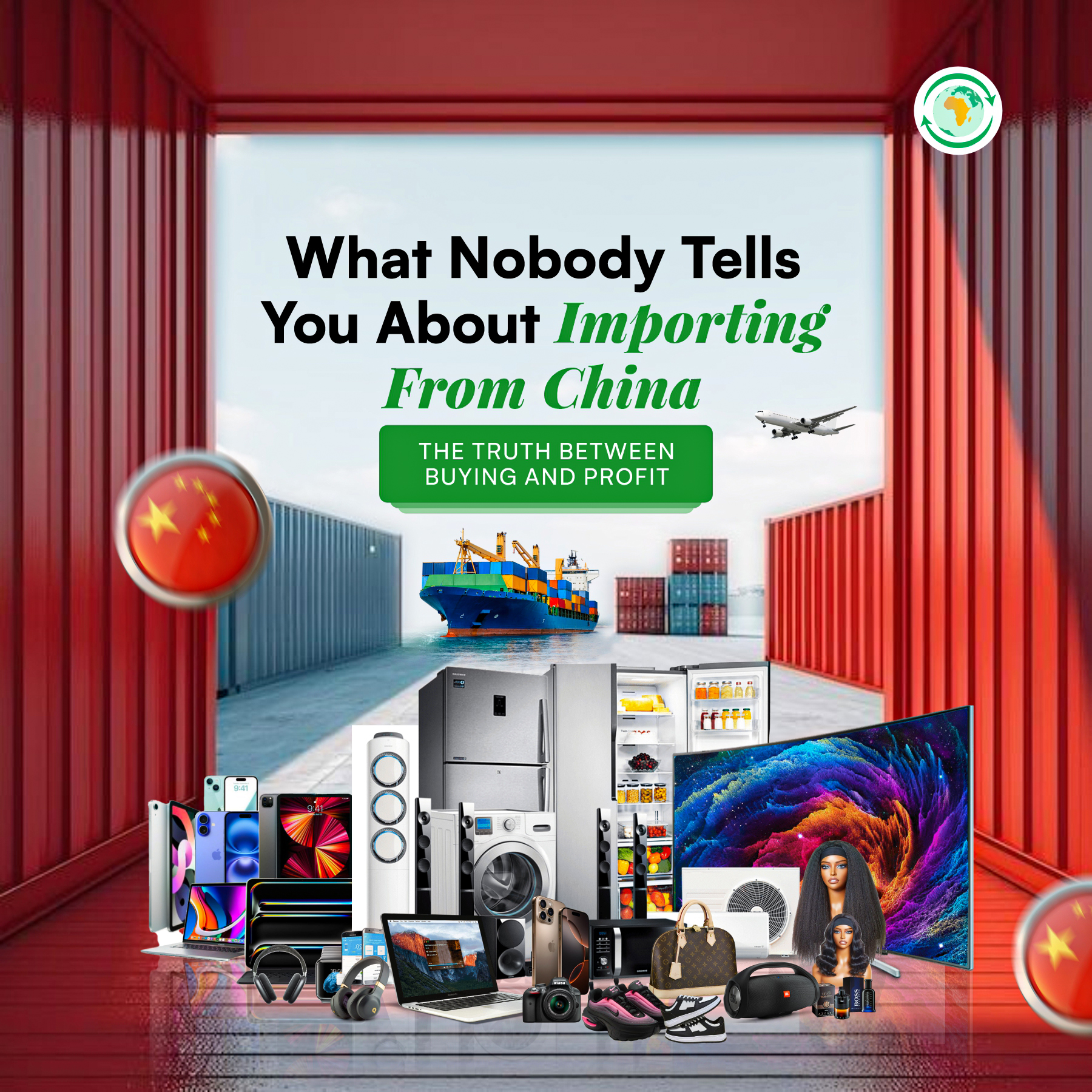

When people search “what nobody tells you about importing from China”, they are usually looking for the truth behind the glamorous success stories.
And the truth is this: importing from China into Nigeria is one of the most profitable business models available today, but it is also one of the easiest places to lose money if you enter with half knowledge.
A lot of online content talks about how cheap Chinese products are, how easy it is to source from platforms like Alibaba and 1688, and how huge the profit margins can be. That part is true. China remains one of the world’s largest manufacturing hubs, and Nigeria continues to be one of the biggest consumer markets in Africa.
But what nobody tells you is everything that happens between clicking “place order” and actually making profit.
That invisible middle is where most importers win or fail. This guide will show you what other blogs left out, show you the systems, psychology, risk, timing, and why shipping with the right logistics partner like AfricanIES changes everything.
The Truth Nobody Tells You About Importing from China
The biggest lie many beginners believe is that importation is simply buy low and sell high.In reality, importing from China is a system, not a transaction.
The product price is only the beginning.
Between China and Nigeria lies a long chain of events: supplier verification, sample testing, payment processing, shipping decisions, customs documentation, clearing fees, and local delivery.
Many Nigerian importers discover this too late.
A recent logistics guide confirms that the biggest causes of failure are poor supplier vetting, shipping delays, customs issues, and hidden charges. This is exactly what nobody tells you upfront.
Cheap Products Can Become Expensive Mistakes
One thing nobody tells you about importing from China is that cheap does not automatically mean profitable.

A product that costs $2 in China may end up costing far more by the time you ship from china to Lagos.
Shipping charges, customs duty, exchange rates, and local logistics can significantly increase your landing cost.
Experienced importers often budget 25–30% extra above product and shipping costs to cover surprises such as handling charges, warehousing fees, and customs reassessment.
This is why successful importers calculate landed cost, not just product cost.

Read our complete guide on Real Cost Breakdown of Importing Goods from China to Nigeria
Nobody Tells You That Cheap Products Can Attract Expensive Problems
The lowest quote is not always the best deal.
This is one of the most painful lessons in China importation.
That “cheap supplier” may be cutting corners in materials.
That lower quote may exclude packaging.
That low price may come with higher MOQ pressure later.
Trade and sourcing guides repeatedly note that hidden quality issues are one of the most common importer regrets.
Sometimes what looks like a great deal at the beginning becomes an expensive lesson after arrival.
- Customers return the product.
- Reviews go bad.
- Sales slow down.
- Brand trust drops.
Nobody tells you that the cheapest supplier can become the most expensive mistake.
Suppliers Can Look Legit and Still Cost You Money
Another thing nobody tells you about importing from China is that not every supplier is what they claim to be.
Many suppliers say they are direct factories when they are actually trading companies or middlemen.
This distinction matters.
A Reddit importer recently shared that checking the supplier’s business license to confirm whether it says manufacturing or trading could have saved them months of mistakes.
That one small detail can affect pricing, quality consistency, and communication speed.
This is why ordering samples is not optional.
Factories may deliver perfect samples and then cut corners on bulk orders if there is no inspection process.
That is one of the biggest truths nobody tells you.
Nobody Tells You That Shipping Cost Is More Dangerous Than Product Cost
A lot of first-time importers obsess over negotiating product prices.
They fight for $0.20 off per unit.
They spend days comparing suppliers.
Meanwhile, they barely spend enough time thinking about freight.
This is where many profits disappear.
Multiple logistics sources confirm that shipping is one of the biggest hidden costs in China imports.
A product may cost $1.
By the time it gets to Nigeria, it could effectively cost $2.50 or even $3 depending on freight type, handling, customs, and last-mile delivery.
That means shipping can sometimes cost more than the product itself.
Shipping Is Where Most Nigerians Lose Profit

People always ignore this part: shipping is where businesses either scale or collapse.
Many people spend all their energy sourcing products and negotiating prices, only to make poor shipping decisions.
- They choose the cheapest random shipping agent.
- They don’t understand the difference between air freight and sea freight.
- They underestimate delays.
- They ignore customs documentation.
- Then the goods get stuck.
This is where AfricanIES becomes more than just a shipping company.
AfricanIES helps importers ship from China to Nigeria through a structured logistics system that reduces uncertainty.
Instead of multiple unknown middlemen, you work with a process.
That process means better cost visibility, better delivery timelines, and reduced risk.
Because what nobody tells you is this:
You don’t lose money when buying.
You lose money when shipping goes wrong.
Want more enquiries about starting an import business?
Nobody Tells You That Customs Can Rewrite Your Numbers
This part shocks many new importers.

The declared invoice value is not always the final value customs uses.
Authorities may reassess based on internal databases and product classification.
That means duties can change unexpectedly.
The profit you estimated before shipment may not be the same after clearance.
This is one of the biggest reasons land cost planning matters.
It is also why working with a reliable shipping and logistics structure like AfricanIES reduces avoidable documentation and declaration issues.
Because when paperwork is cleaner, surprises are fewer.
First-time importers don’t know how serious customs documentation is.
Many people assume once goods land in Nigeria, they can just collect them.
Reality is different.
Missing HS codes, under-declared value, incorrect product descriptions, and a delayed shipment are not just inconveniences. It is frozen capital.
Nobody Tells You That Importation Is Really a Timing Business
Another thing nobody tells you about importing from China to Nigeria is that time is money.
Factories may tell you production takes 7 days.
Experienced importers add 2–3 extra weeks because delays are common, especially around holidays like the Chinese New Year.
Then shipping itself takes additional time.
Then customs.
Then local delivery.
By the time everything is complete, your expected timeline may have doubled.
This is why businesses that use organized logistics systems like AfricanIES often outperform those relying on random agents.
Because speed is not just delivery speed. It is business speed.
Nigerian Demand Must Come Before Chinese Supply
This is another brutal truth.
Nobody tells you that some products sell well in China or globally but fail in Nigeria.
Importation is not just about what is available.
It is about what Nigerians actually want.
Consumer behaviour in Nigeria is driven by pricing, quality perception, urgency, and local trends.
Before importing anything, validate demand.
Exchange Rate Can Kill Profit Overnight
A key ranking topic many Nigerians search is China importation cost in Nigeria.
The naira-dollar exchange rate plays a massive role.
A product that looked profitable at ₦1,300/$ may become less attractive at ₦1,600/$.

This is why smart importers price based on future margin, not present margin.
Nobody tells you this until you experience it.
The AfricanIES Advantage
What nobody tells you about importing from China is that most of the stress comes from logistics uncertainty.
That’s exactly where AfricanIES helps.
AfricanIES helps businesses and online shoppers simplify international shipping and delivery into Nigeria through a reliable logistics system.
Whether you are moving personal shopping orders, commercial inventory, or bulk shipments, the structure matters.
With better visibility, organized shipping cycles, and smoother delivery coordination, importers spend less time worrying about movement and more time selling.
Need fast and reliable shipping to Nigeria? Explore our Air Shipping from China to Nigeria service.
Final Thoughts
If you searched what nobody tells you about importing from China, now you know the real truth.

The truth is not that importation is hard.
The truth is that importation punishes assumptions.
Cheap products are not always profitable.
Suppliers are not always factories.
Shipping is not just movement.
Customs is not automatic.
And profit is made in the planning.
When you combine smart sourcing with structured logistics through AfricanIES, importing becomes less risky and far more scalable.
That is what nobody tells you.
But now you know.
Awarded Most Reliable Shipping Company (2019-2023)

FAQs
How much does it cost to import from China to Nigeria?
The total cost depends on product type, shipping method, customs duty, and delivery fees. Always calculate landed cost, not just supplier cost.
What is the safest way to ship from China to Nigeria?
Using a structured logistics service like AfricanIES helps reduce uncertainty and improves shipment visibility.
How long does shipping from China to Nigeria take?
Air freight can take days to a few weeks, while sea freight may take several weeks, depending on clearance.
Why do many Nigerians fail at importation?
Common reasons include poor supplier verification, wrong product selection, and underestimating shipping and customs costs.
Do I pay customs duty?
Yes, but it can be minimized with proper shipping methods.
Pro Tips to buy an iPhone from the USA to Nigeria Easily
- Always compare prices before buying
- Buy during U.S. sales (Black Friday, etc.)
- Use trusted procurement services
- Track your shipment
- Avoid deals that seem too cheap
CONCLUSION
Learning how to buy an iPhone from the USA to Nigeria easily is one of the smartest ways to save money and access original devices without stress.
Instead of paying inflated prices locally, you can take control of your purchase, shop from trusted U.S. stores, and ship safely using a reliable logistics partner.
With the right approach, you don’t just save money — you also gain confidence in what you’re buying.
And that’s the real advantage.
Whether you’re buying for personal use or resale, this method gives you:
- Better pricing
- More options
- Guaranteed authenticity
- Safer delivery
So why wait?
Start today and experience a smarter, easier, and more profitable way to own your next iPhone.
Next Step
Ready to start an importation business ?


Leave a Reply